Clear acrylic
AcrylicClear Cut is for teams who need clear acrylic parts with undamaged faces, ready for flame polishing. This overview covers what the machine can do, who it suits, and typical project choices.
When cutting clear acrylic in South Africa, weather swings can trip up even experienced teams. On the Highveld, dry winter air builds up static, attracting dust to freshly cut panels and risking fine scratches before you even start assembly. Down at the coast, summer humidity can cause sheets to sweat, making them slippery and harder to grip without marks. To sidestep these issues, always wipe down both faces with a clean, lint-free cloth before stacking and cover each layer with a soft interleaf. If your job needs to travel between Joburg and Durban, pack panels vertically in rigid crates to keep faces separated and reduce shock during transit.
A common slip-up is skipping the interleaf step or stacking panels too soon after cutting. Rushing this process, especially when moving between climates, can leave you sorting out haze or micro-abrasions at the last minute. Taking a couple of extra minutes to prep and pack right on the cutting floor saves hours fixing preventable damage later.
Industries · Blog · Contact us
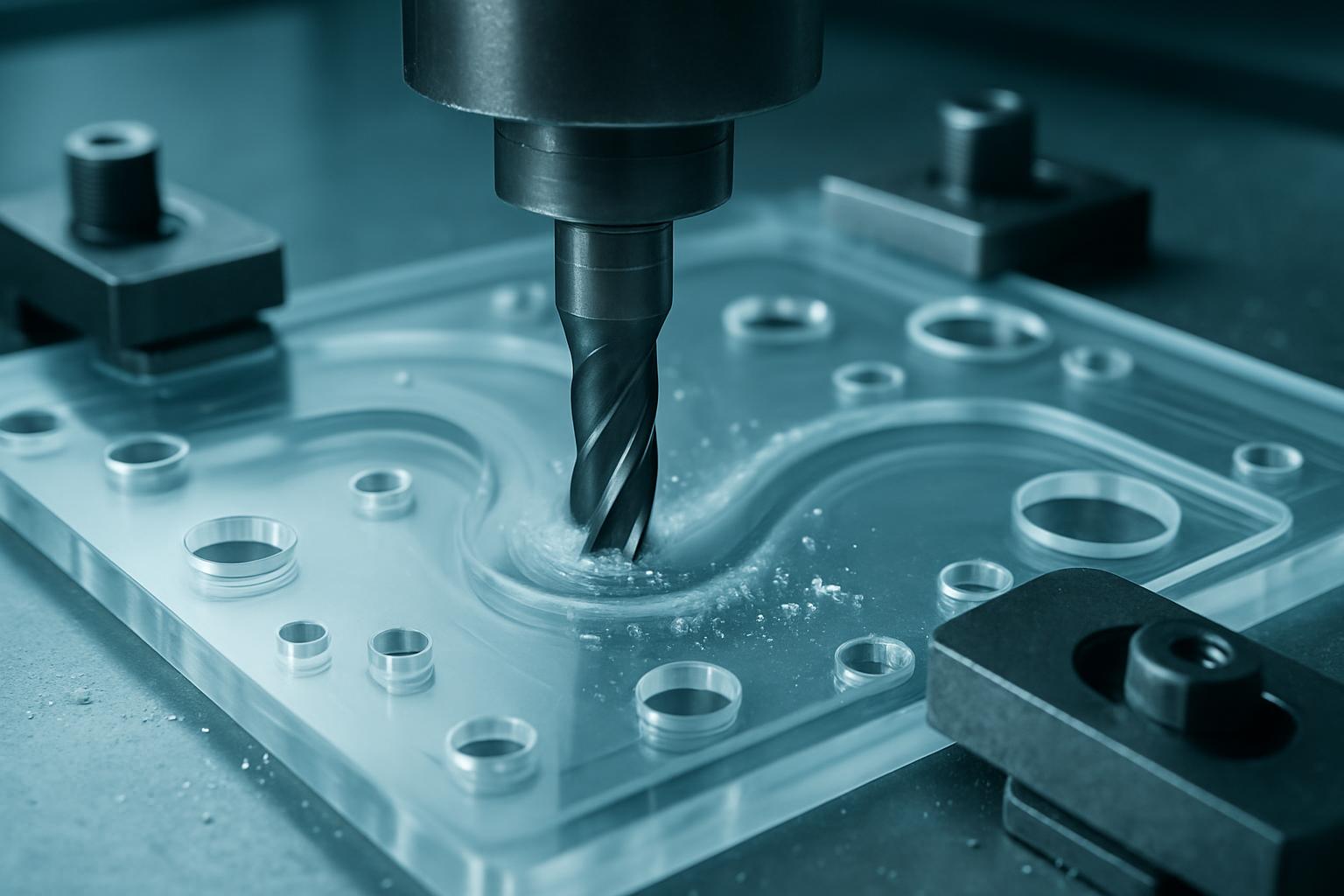
Clear acrylic shows every scratch. AcrylicClear Cut prioritises soft hold-down and cool toolpaths.
| Thickness | 2,25 mm |
|---|---|
| Hold | Soft pads |
| Bits | Single-flute cool |
| Edge | Polish ready |
| Use | Displays & models |
AcrylicClear Cut is the default choice in our range for workshops and design studios needing dependable, clear acrylic pieces with clean edges and no surface scuffing. Using soft, purpose-made fixtures, we keep faces ready for flame finishing straight off the bench, so your crew does not waste time on extra cleaning or sanding. This machine is especially popular in Gauteng, Mbombela and coastal cities where client-facing work must land flawless, even after a Highveld dust storm or Durban’s summer humidity. It sits between versatile options like MultiSheet Nest for mixed materials and ProfileEdge Router for more complex shapes or edge treatments. If your project is mainly see-through panels, branding displays or point-of-sale gear, start here.
Your main advantage is speed and certainty, after you supply your constraint clearly. If you represent a signage team, product designer, fitout contractor or retail fabricator, you’ll find this machine covers most production setups involving cast or extruded acrylic up to standard sheet sizes. Mbombela and Gqeberha teams come to us for cut faces that go direct to flame polish or assembly without the back-and-forth usually caused by micro-scratches or mishandled handoff. Before raising an order, think through essential constraints: panel thickness, visual clarity, and tolerance for soft fixtures. Our operators can help convert your field conditions into practical set-ups, including prepping jobs for humid storage or transit between Johannesburg and Cape Town.
AcrylicClear Cut is built to solve flame-polish ready jobs at scale, but if your project has acoustic needs, ultra-compact parts or difficult kerf profiles, another unit may serve better. Prototype Cut Bay is designed for one-offs or tricky proofs, while SignBoard Profiler does larger shapes with branding overlays. When handling thick sheets or when edge detail is critical, consider Precision Sheet Router. If your order involves mixed runs of aluminium, composite and acrylic, MultiSheet Nest is often the smarter call. Always match your constraint to the intended process before submitting a brief.
Teams often skip writing down the main constraint, be it tolerance, finish or panel size, before seeking a quote, which causes late-stage changes and rush fees. Another frequent slip is forcing a fit: choosing AcrylicClear Cut for jobs needing features it’s not optimised for, like ultra-tight nests or mixed plastics. Misreading the spec sheet can cause compatibility issues with edge finishes or installation hardware. Finally, failing to account for handling and storage conditions, such as Highveld static or Cape Town moisture, often means panels arrive scratched or fogged. Planning upfront, and sharing full context, avoids these headaches.
We keep a running log of what has failed or succeeded on similar jobs, so your brief benefits from real field fixes. Operators document machine settings and handling routines so your second shift does not guess at feed speeds or safe lift points. If your site is close to Isando or Germiston, you are welcome to arrange a physical try-on in the nest bay. When briefing for the first time, two site photos plus a preferred timing window get us started. As always, send any site-specific handling photos and your initial requirements through our contact form. For deeper setup advice or to check process fit, see the AcrylicClear Cut service and AcrylicClear Cut nesting & fixtures pages.
Verified Google reviews