
We deliver training, support, setup and real-world troubleshooting for FoamCore Nest in South African conditions. Know where it suits, what it requires and the right prep before your next run.
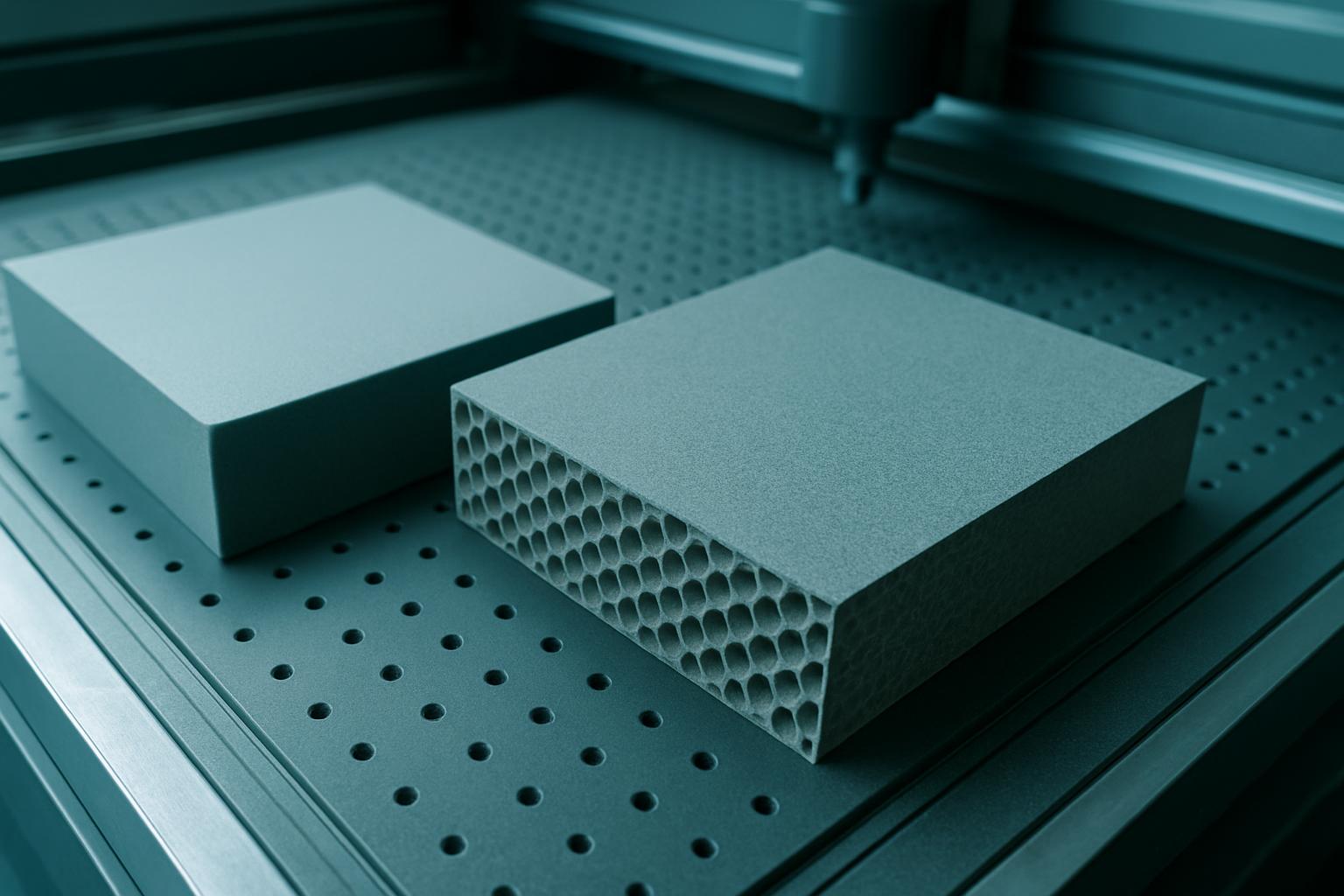
A common mistake is starting a new FoamCore Nest job with foam sheets straight from the supplier without checking for moisture or surface warping. In South Africa, foamcore can pick up damp on the Highveld after rain or go brittle in coastal storage. Before your first cut, lay out a few sheets flat in your workshop and check for bowing or soft patches, especially if they were stored near a loading bay or under a leaking roof. Mark and set aside any boards showing unevenness so they do not throw off your nesting plan or cause edge tearing.
This ten-minute check saves hours of rework and gives your operator a baseline for what good foam looks like at your site. If you do spot problems, adjust your feed speed or change the cut order to avoid pushing a warped sheet through first. It is a simple habit that keeps production on track and reduces material loss.
See support and kerf log template. Use our contact form.
Our FoamCore Nest service is built for South African workshops running or preparing to run a FoamCore Nest system. We provide on-site training, ongoing support and hands-on troubleshooting that addresses local materials, intermittent power, and moving equipment between provinces. FoamCore Nest is ideal for repeat runs needing quick turnaround, tight nesting and less bench clean-up, which suits high-mix production in Gauteng, Cape Town or Durban where skilled teams are stretched. The system excels with lightweight sandwich panels, signage blanks or composite inserts needing reliable edges and precise tolerances. We work with crews in industrial parks from Midrand to George, as well as smaller workshops in Gqeberha or Polokwane tackling seasonal peaks.
FoamCore Nest works well for established factories aiming to scale up nesting throughput, sign shops where time on the bench equals lost margin, or engineering teams who need reliable profiling across different foam types. It is not ideal for very high-density boards, batches smaller than ten units, or spots where climate swings mean constant machine recalibration. If your workshop has no three-phase supply, lacks a climate-stable store, or you are mostly cutting dense hardwoods, other machines or a different finish may serve you better. Often, teams without an in-house operator or a maintenance lead ready to learn may find the service visits costlier than outsourcing the work to a contract shop. Send a message through our contact form if unsure and we’ll talk you through your actual options instead of steering you to a line you do not need.
We customise field support and training to match your actual crew, not a textbook team. We start by following your real process, from drawing handover to moving the finished part off the bench. We check for practical constraints: a narrow gantry slot, a shared power line with another machine, or materials left in the sun. Our technician sets up your nesting routine, maintenance plan and backup checks for your actual site, not just the manual. If your floor is in Germiston or George, we work around local power cuts and public holidays. Follow-up calls are kept short and we leave you with clear notes you can use. Book us for installation, a refresher during staff turnover, or troubleshooting after a change in board supply or batch order.
Last winter, a Durban sign shop with growing orders for foamcore displays ran into snags. Jobs backed up after weekends of coastal humidity threw off previous machine settings, and part edges needed hours of extra sanding. The owner briefed us with two photos, the orders in hand, and a list of timing frustrations. We examined their material flows and mapped a new nesting path, updated the part constraints, and adjusted the maintenance plan for the local power cycle. Within three days, the crew’s rework time halved and they started shipping on schedule, despite two rounds of rolling blackouts. Documentation stayed simple enough for the junior operator to run on Mondays when the foreman was off-site. Now, their shop runs batches of 80 sheets at a time, all with edges ready for print lamination.
Before you get in touch about FoamCore Nest service, gather the details below so we can give you a straight answer on timing, scope and next steps. Even rough notes help us avoid delays from back-and-forth. If you have a drawing set, a previous service log or a statement pack, send those along. Photos of your current setup and a summary of recent issues also help. We ask these questions upfront so we can move straight to a practical solution, not just general advice.
For deeper technical detail, see FoamCore Nest specifications or FoamCore Nest nesting & fixtures. Visit Machines or Industries for wider context.
Most missed steps come from not matching the choice of machine or finish to your real on-site constraint, whether that’s power, material storage, climate or staff turnover. A second common pitfall is choosing the ‘best’ spec on paper, only to find it needs a specialist for every tweak. We help by asking for your honest constraints upfront, so you can avoid expensive rush fixes. Our notes from previous visits mean we won’t repeat a failed setup that cost you hours last time. If you brief us for the first time, keep it plain, two photos, a timing window and your top issue is enough to start.
To get your FoamCore Nest service started or to check if it is the fit for your workshop, send a message through our contact form. We’ll answer with a practical sequence and a direct quote, not a marketing script.
Verified Google reviews