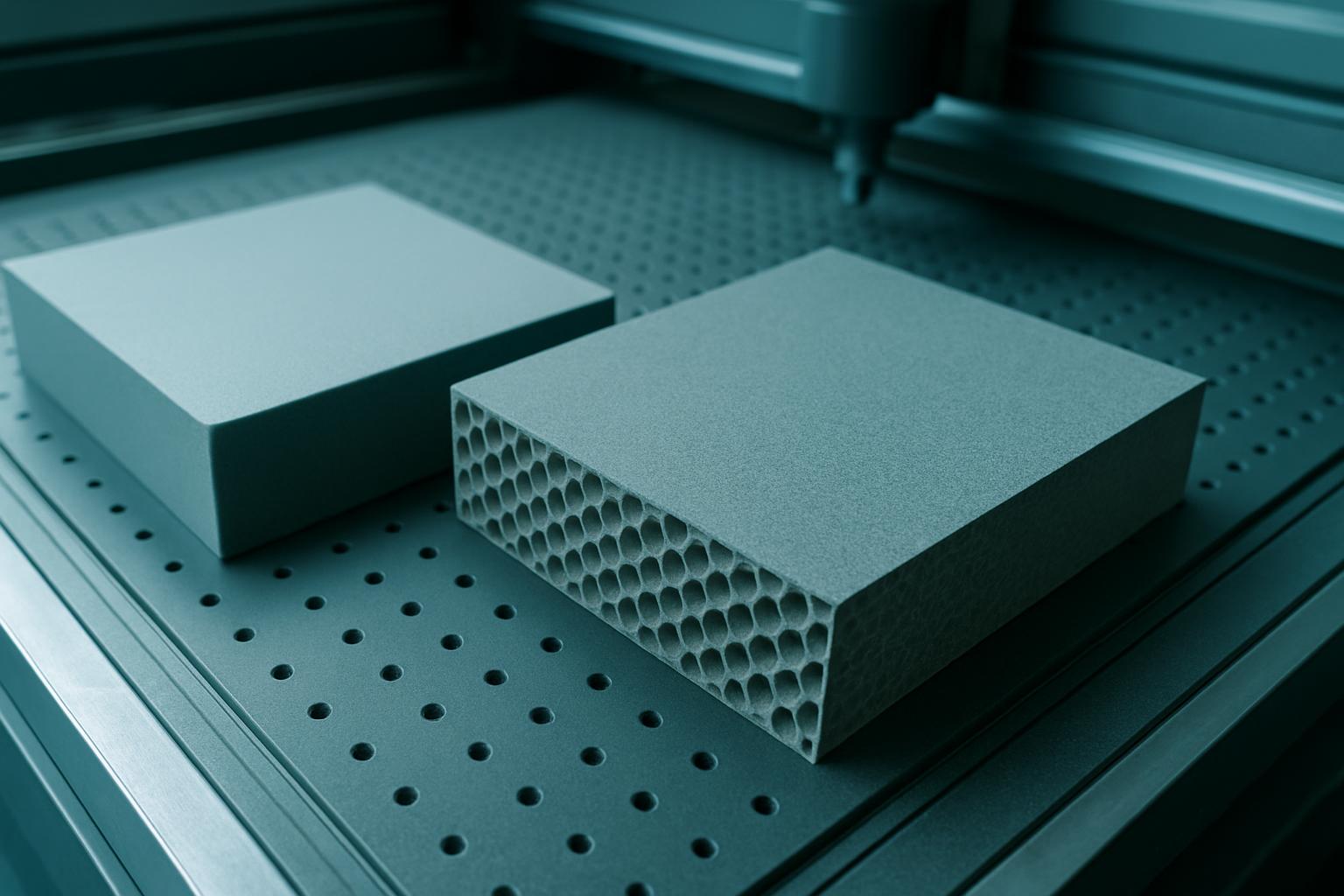
Find practical FoamCore Nest nesting and fixture options for South African workshops. Get advice on habits, setup, and what to prepare before you email for a quote.
Before starting a nesting run, always check that your foam-core panels are flat and free from bowing, especially after storage in humid coastal regions or dry Highveld conditions. Warped or uneven panels can throw off the entire nesting layout, leading to wasted material and poor fit at assembly. Place a straight edge along the panel in several directions to spot any curl or dip. If you find an issue, set those sheets aside for manual jobs or cut smaller parts from the flatter sections. Taking a few minutes for this check helps avoid costly rework and ensures your finished parts stack cleanly for transport and handover.
Many teams overlook this step, especially when rushing between jobs, but it saves both time and money in the long run. Consistent panel checks are just as important as planning your fixture and nesting approach, no matter the size of your operation.
FoamCore Nest nesting is for teams that need precise, repeatable layouts on foam-core and composite sheet materials. Our approach suits Gauteng production, coastal installs, and projects where clean handoff saves downstream hours. The right fixture plan reduces adjustment on your floor, so parts show up ready for the next stage instead of backtracking at the bench. Not every site needs full nesting, if you deal with changing part sizes every week, fixed jigs might be more practical. But for regular runs or high-spec pieces, invested nesting pays off in accuracy and less waste.
If your crew faces tight deadlines, like what you see with Durban exhibition setups or Pietermaritzburg fit-outs during municipal outages, reliable handling and clear path planning become essential. FoamCore Nest’s fixture choices help you prevent panel warping or tedious, manual repositioning. We offer fixture setups that match real South African workshop realities, from actual sheet sizes in local yards to the 230 V and three-phase power supplies found on most floors.
Nesting and fixtures make the most sense for teams repeating shapes or projects, like shopfitters, signage manufacturers, and events crews. If your parts are all one-offs or you’re cutting by hand due to irregular stock, you may find that basic fixtures or even manual layout give you more flexibility. On the other hand, if reducing waste and increasing output matter, especially in tight timescales, nesting software and well-chosen fixture kits give a clear advantage.
Some smaller studios in Gqeberha and upcountry might not have the floor space for big fixture arrays. If your setup lives in a garage or corner of an industrial park, tell us about your physical constraints and workflow upfront. We’ll keep your process honest with what’s practical for local dust, humidity, and staff rotation.
On most South African floors, nesting starts by writing down the constraints, sheet size, machine bed, finish order, and delivery windows. Teams that document these early usually avoid rush fees and last-minute rework. After specifying the main constraint, the operator matches it to a fixture and nesting pattern that suits the actual process, not just the catalogued option.
Take a signage contractor in Bloemfontein: they need twenty-four foam-core panels, trimmed for clean edges, sized to fit a small bakkie and a tight event schedule. The team records the largest allowed panel, notes possible power cuts, and selects a fixture that grips panels securely but allows quick size changes during the run. This way, panels arrive ready for assembly and the fixture plan keeps things moving even if there is a brief outage.
To keep the quoting process fast and relevant to your situation, we suggest you gather these details up front. The more clear your brief, the fewer back-and-forth mails, and the better your odds of a first-time fit. If it’s your first enquiry, a couple of photos and a rough timing window are enough for us to get started. If you have a drawing set or a statement pack, send those as attachments, no matter how messy.
Email all project details through our contact form. We keep a note on what caused delays on similar past jobs, so your brief builds on what works and avoids the old pitfalls.
Teams sometimes skip the step of writing down the main constraint and end up with the wrong finish or an ill-fitting fixture. Others pick a flashier option that nobody on site can actually maintain, which leads to troubleshooting calls and delayed assembly. For jobs crossing provinces, forgetting to allow for standard transport sizes or variable climate (like coastal humidity in Cape Town or Highveld dust) is a regular pain point.
Lastly, rushing into setup without checking how the nesting matches your actual staff skills or available kit causes more lost hours than most teams expect. When in doubt, pick the simpler fixture plan the crew can support without outside help. This ages better than chasing maximum theoretical output.
If FoamCore Nest nesting fills a gap in your process, have a look at FoamCore Nest specifications for technical details or browse the Machines section for alternatives. Not sure what fits your industry? The Industries page tracks common combinations, and the Finishes page covers what’s possible with different coatings or laminates.
For a firm quote path or if you want to discuss options in context, send a message through our contact form with your city and target schedule. We’ll match your brief with proven fixture and nesting options for South African conditions.
Verified Google reviews