
Here we list practical FoamCore Nest specifications for South African teams. See real footprint numbers, decide if it suits your floor, and get ready to brief us with confidence.
One common issue in South African shops is panel orientation, especially with composite foam boards that use directional facings or branding. Before you start a run, double-check your digital drawing set against the physical panel stack. Make sure all boards are loaded with the correct face up and grain direction matching your design. This is especially important for signage and exhibition work where finished surfaces must align perfectly.
If a batch is loaded with boards facing the wrong way, you can end up with mismatched textures or logos running off-centre, which wastes both time and material. Assign one team member to do a quick panel check as part of your setup routine. This small step helps prevent costly reruns and keeps your production on schedule, especially when working under tight delivery windows.
Industries · Blog · Contact us.
| Cores | Foam / honeycomb |
|---|---|
| Downforce | Soft |
| Bits | Core-safe |
| Pack | Stand kits |
| Use | Exhibition & staging |
Use our contact form for a tailored footprint.
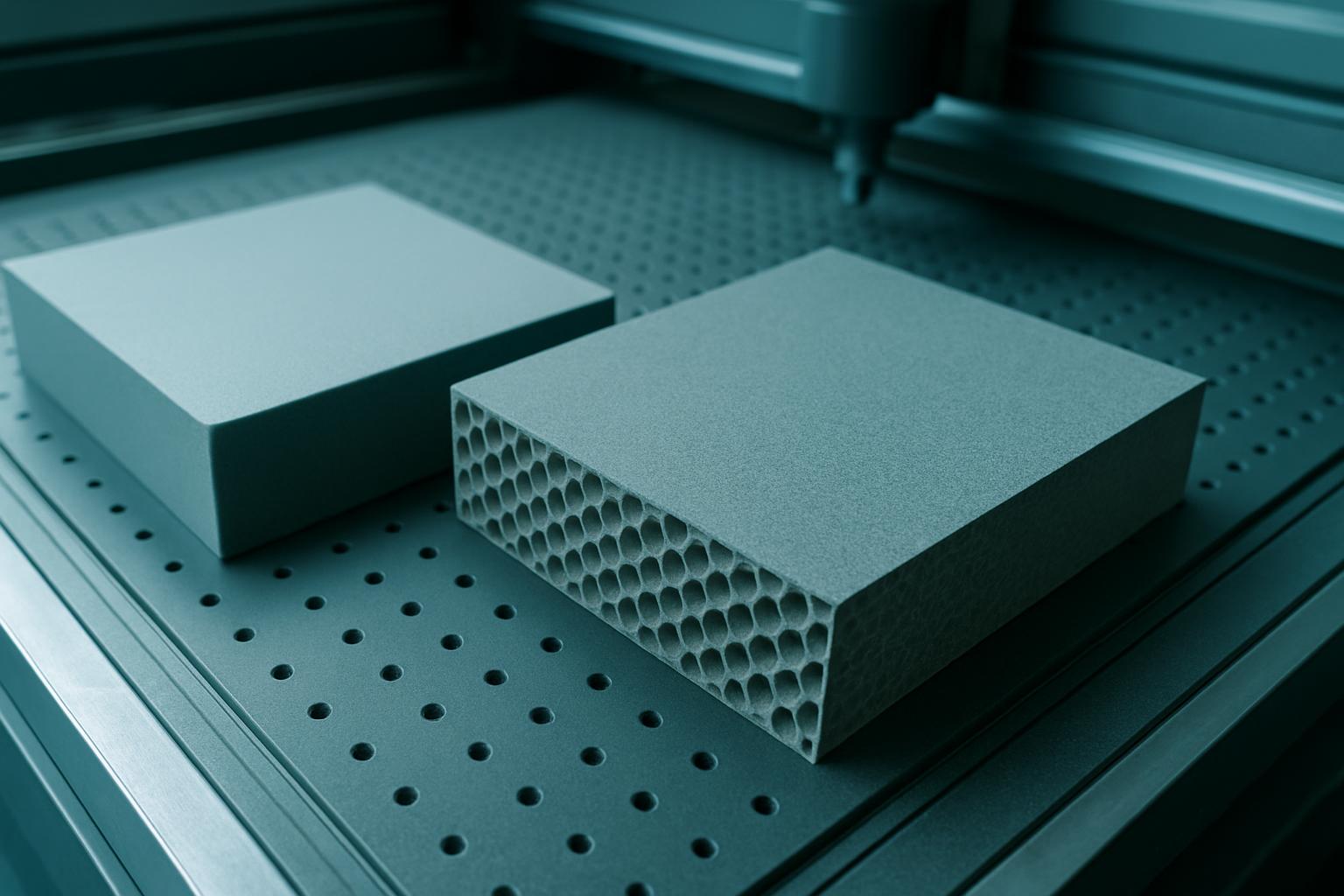
FoamCore Nest is a dedicated sheet processing station for rigid foam board, paper-faced foamcore, and composite laminate panels up to 2.5 metres by 1.6 metres. It suits signage shops, exhibition builders, modelmakers, and packaging studios who need precise cutting and clean edges without dust storms or blade chatter. This station is not for large-format aluminium, full phenolic core, or FRP. If you’re in metalwork or heavy joinery, the operation speed and bearing setup here will feel lightweight.
Most Gauteng and coastal firms that use FoamCore Nest want clean cuts in bulk, think event branding, shopfitting panels or theatre set flats. The footprint and power requirements are scaled for a medium-sized production bay with standard 230 V or three-phase. If you need to move it between floors in a business park or squeeze through a workshop door, check floor space and access carefully before committing.
We keep our published specs realistic for South African conditions, not European showrooms. The work envelope runs 2.5 metres by 1.6 metres. Finished part tolerances typically hold to ±0.7 mm on foamcore and most sandwich panels. The working height is a true 920 mm, with floor clearance for moving panels and vacuum scrap collection.
The standard footprint, with space for an operator, measures 3.4 metres by 2.4 metres. Make sure to leave at least a one-metre buffer on two sides for comfortable loading and tool swaps. This bay needs a steady 230 V mains supply, or for bigger runs, we can set up for local three-phase. We recommend this only for shops with dependable mains or a solid backup, as power cuts or municipal outages can interrupt jobs. Dust is managed with enclosed extraction, but fine foam may still escape, so organise your vacuum routine to handle Highveld static or coastal humidity.
On a typical Johannesburg week, a graphic shop runs 40 branded foamcore signs for a Sandton materials supplier. The operator brings the digital drawing set, double-checks the largest panel size, and slots in the custom profiles from the last project. The FoamCore Nest clamps each board, runs the nested profile path, and ejects clean component stacks, no scoring by hand, no crunching the corners. The offcut bag is swapped out mid-morning to keep the station clear of fluff. As soon as the run is finished, the next project goes on, using the same fixture layout.
Delays usually come from teams underestimating space or missing real site power checks. If your floor is affected by outages or power cuts, tell us early so we can plan for realistic run times or advise on adding a buffer strip to your nest layout. For more on accessories and setup, see our FoamCore Nest service and nesting & fixtures pages.
To get a practical sequence and real quote for your FoamCore Nest job, gather a few essentials first. If possible, send a plan of your available floor space noting any obstacles or height changes. Include your city (for transport) and your preferred timing, especially if your shop runs on a tight schedule or gets frequent power interruptions.
Attach drawing sets or panel lists, even if messy. A couple of good photos showing your stack of boards or typical workbench help us get started quickly. For anything unusual, large sheets, odd loading routes, or extra fine work, flag this directly in your email. That way, we send back a checklist, not a generic quote. For context on other machines or finishes, explore our Machines or Finishes pages.
The most common issues occur when teams skip measuring site access or forget to check real power loads during busy runs. Missed constraints at the start can force an expensive second visit, or worse, skew a whole batch of panels on short notice. For South African floors, a cracked wheel or jammed vacuum can halt production if you haven’t left room for hands-on fixes.
We keep a straightforward record of recent jobs, dates, site snags, and quick fixes to avoid repeating the same mistakes. If your job spec is new or has tight tolerances, give us the details up front. Our first response will be a step-by-step sequence, just the practical checks to run before the spindle starts turning.
Verified Google reviews