Finish
Order foam parts with crisp, undamaged skins and sharp profiling. Our foam skin clean finish minimises crushed cells so your parts are ready for laminating, gluing or visual use.
See FAQ and pair with machines.
Ask about finishes
Foam skin clean is a finish specifically for workshop or production teams that need foam parts with outer surfaces that stay intact through the cutting process. This minimises cell crushing, preserves the 'skin' layer, and gives you parts that are visually crisp and functionally consistent across batches. Whether you are cutting closed-cell PE, EVA or PU foam sheets for signage, gaskets, soft touch panels or insulation, this finish is tailored for jobs where surface uniformity matters. Our shop works with small to medium production runs for Gauteng, Cape Town and Durban makers who require clean, ready-to-use foam elements straight off the machine.
You will want a foam skin clean finish if you plan to laminate vinyl, print, glue, or assemble your parts without extra sanding, or if the edges will be visible in the final use. This is a common choice for signage, acoustic panels, retail display elements, medical foam cut-outs, and high-tolerance gasket work, especially where the foam part is fixed in position and appearance matters.
If you are only after internal foam shapes for packing, low-cost inserts, or sacrificial tooling, you may not need this extra attention on the outer skin. For rough-and-ready shapes or disposable inserts, a basic profile cut (without skin clean) is usually enough and slightly faster to produce.
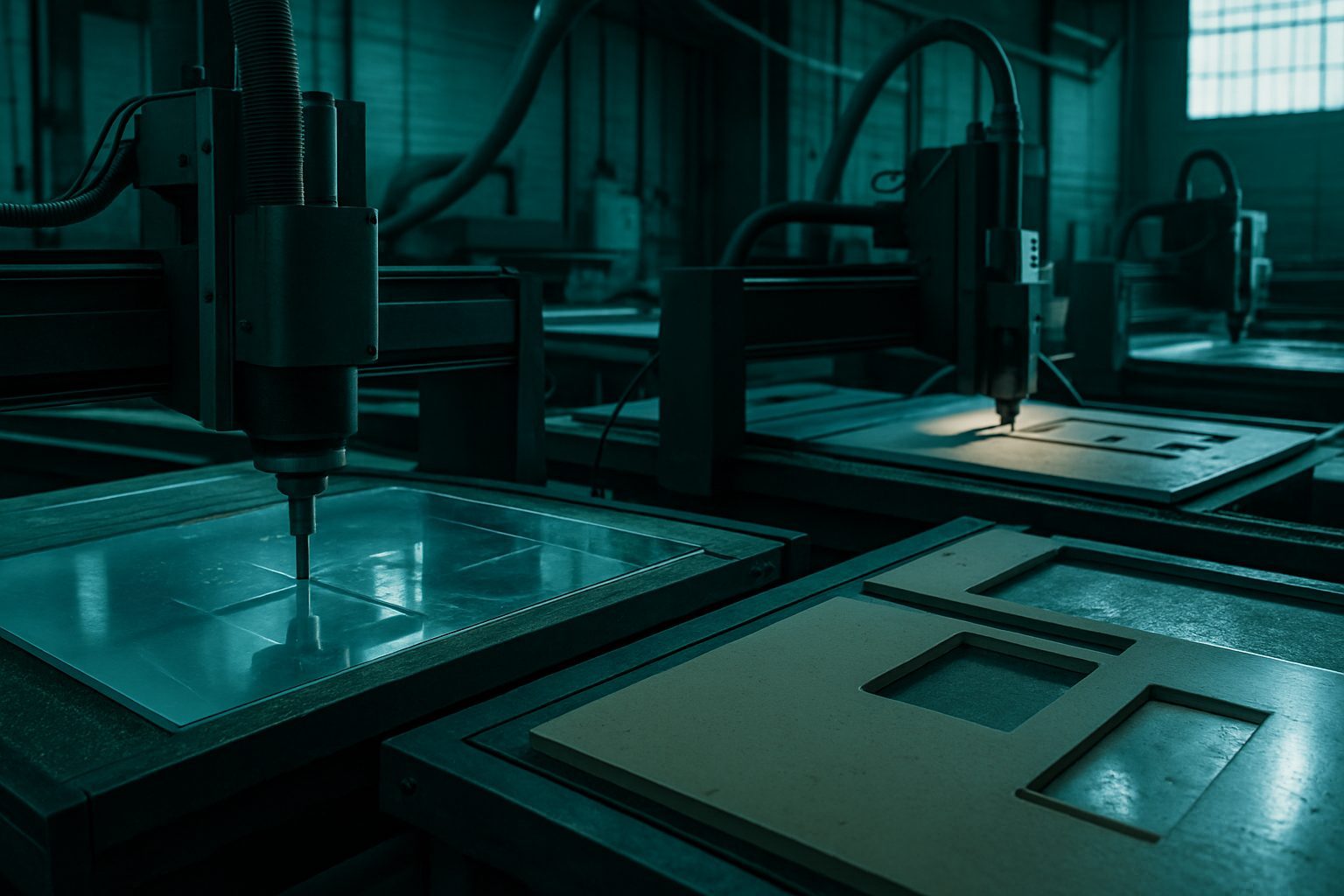
Our team uses specific feeds, speeds and tool paths on the CNC to avoid crushing, smearing or tearing foam cells. Tool selection (down-cut bits, extremely sharp blades, or custom routing profiles) is chosen according to your foam type and thickness. The workholding approach and vacuum settings are adjusted so sheets do not deform or shift under the spindle. We inspect batch samples under strong light to check skin quality before the run is completed.
Parts finished with foam skin clean are stacked to prevent edge bruising and bagged for delivery, whether you collect from our Johannesburg floor or arrange courier to Bloemfontein, Polokwane, or coastal regions where humidity can soften foam edges. If pairing with other finishes such as powder-coat prep or edge-band ready, mention this up front so operations are sequenced properly.
A Durban signage workshop emails us a DXF of 15 mm closed-cell foam panel layouts to be cut for two hotel lobby installations. They specify foam skin clean because vinyl printer graphics will be laminated directly, and any bruised or crushed surfaces would show through. The team confirms foam type, colour and grade, checks the toolpath for internal radii and profile smoothness, then explains how parts will be packed for quick offload on site. Most weeks, jobs like this run alongside retail display work and industrial insulation in our bay.
Save quoting time by gathering these key details before you contact our shop. Exact specs help us set up the right machine file and avoid surprises. Send your requirements through our contact form.
Unclear drawings, vague foam grades, or missing tolerance notes are the main reasons jobs stall. If you are not sure about your foam type, mention any supplier codes or send a reference photo. Avoid digital artwork with stray lines or overlapping paths, as these can cause toolpath errors. Heavy artwork or sharp corners may need to be adjusted for foam behaviour; our team will flag any problem areas before spindle hours begin. Communication is smoother if you confirm upfront whether you need other finishes, like anodise-prep plate or timber oil-ready, on any mixed orders.
Verified Google reviews