
Blog
Vacuum zones for mixed sheets
Vacuum zoning prevents small or mixed parts from lifting during CNC sheet cutting. This guide covers what to expect, who benefits, and the steps we use in South African workshops.
Checking seals before each run
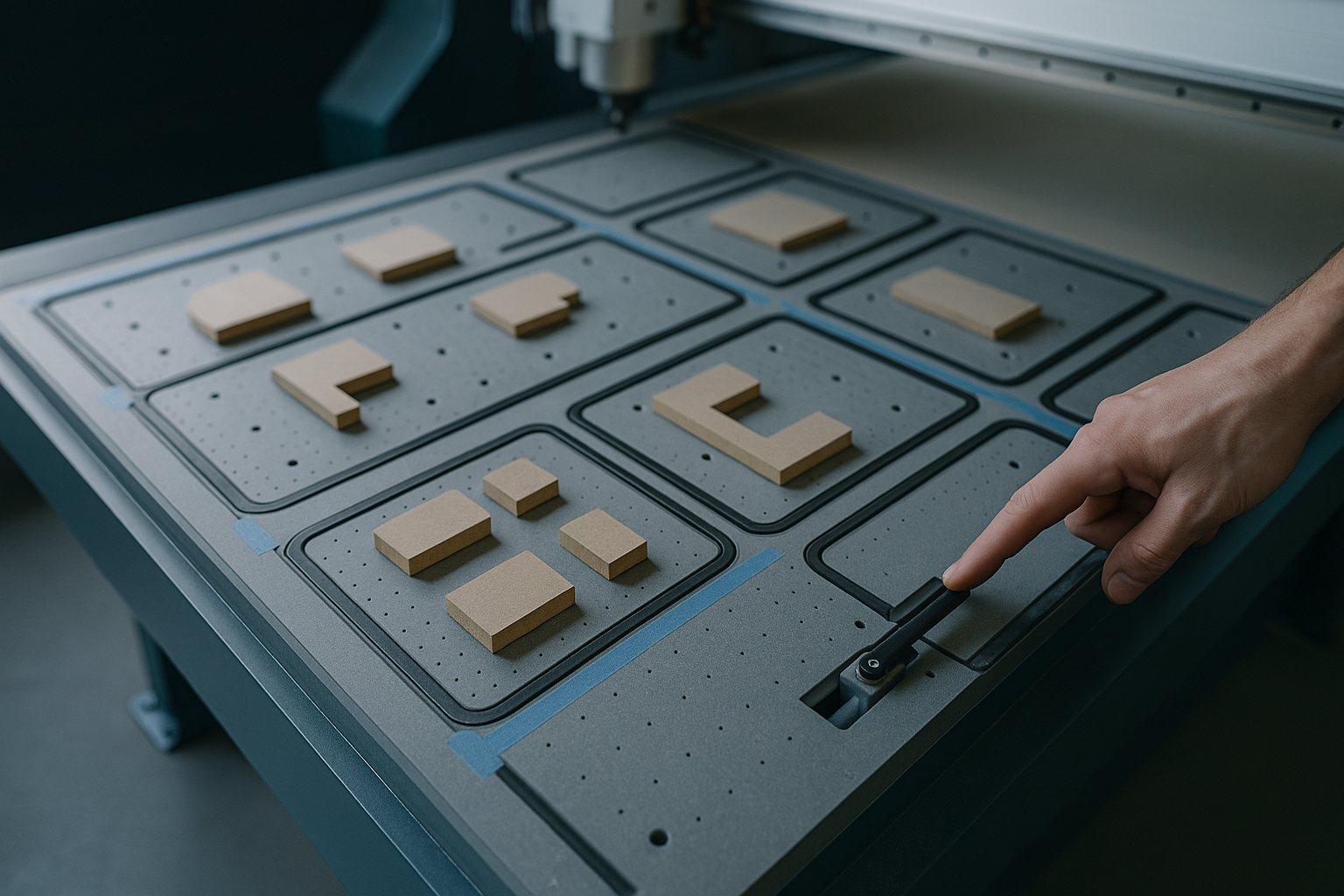
Before starting a mixed-sheet job, always check the gasket seals on your CNC bed. In South African shops, dust and offcut debris can settle quickly, especially in Gauteng’s dry winters or coastal humidity. A small gap or worn section along a zone divider will leak air, dropping the hold and letting small parts shift. Run your hand along every gasket and press lightly to feel for soft spots or cracks. Replace any section that feels loose or brittle before you load material. We have seen batches ruined just from a single missed leak near the edge.
If you are switching between different sheet types, keep a soft brush and vacuum handy to clear the bed between each run. Even a few stray MDF fibres can break the seal with acrylic or aluminium. These quick checks take a minute but save hours of rework and wasted stock, keeping your vacuum zones working at their best.
Workshop context
Zoning beds so small parts do not lift.
What we recommend
For best results, use vacuum zoning together with a VacuumHold Fixture. If you want to see how it handles your own material mix, bring your sheet in for a demo at Sunnyrock or your nearest showroom. We will show you real hold-down on your actual job layout.