Blog

Soft hold-down for clear faces

Elastomer pads hold down acrylic during CNC cutting without leaving ghost marks on clear faces. This note details where soft hold-down works, and what to prepare before you email us for a job.

Checking pad compatibility before a production run

Before you commit to a full run using soft hold-down for clear acrylic, always test your elastomer pads on a sample piece from the same batch as your job material. Even pads that claim to be non-marking can react differently to local suppliers’ acrylic, especially if there have been changes in resin formulation or surface treatment. Run a short trial cut with your exact feed rates and spindle speeds, then inspect both sides under strong light for any subtle haze or compression lines. In our experience, pads that work well in winter can behave differently in humid coastal weather or during a Highveld thunderstorm. Never skip this check, especially if you are supplying panels for display or lighting, as a missed mark can mean a costly remake.

Workshop context

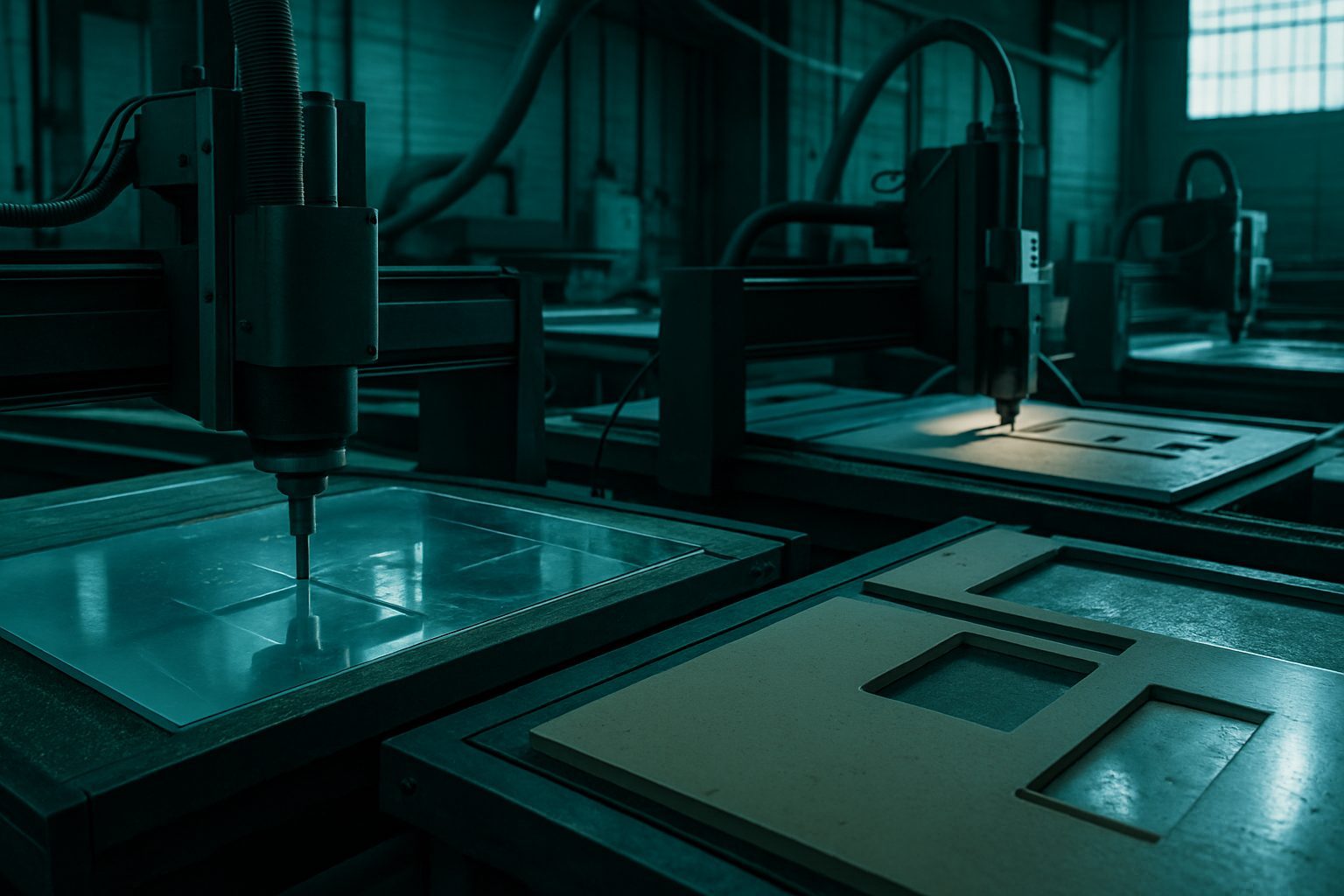
Elastomer pads that do not ghost on acrylic.

What we recommend

For best results with clear acrylic, use soft hold-down alongside the VacuumHold Fixture, especially on jobs where surface quality matters. If you want to see how it performs on your material, arrange a demo at our Sunnyrock floor or one of our regional showrooms. Bring your own offcut or specify your application, and our team will walk you through the setup and common adjustments for South African conditions.
What soft hold-down is and where it fits best

Soft hold-down uses elastomer pads or similar materials to secure sheets during CNC routing or machining, mainly when working with clear acrylic and some polycarbonate. These pads reduce the risk of leaving ghost marks, dents or compression shadows that often appear on transparent surfaces trapped under hard vacuum or metal clamps. Teams in Pietermaritzburg, Cape Town, and Bloemfontein who supply shopfitters, lighting panels or laboratory glazing often choose this hold-down to keep the visible face pristine, especially for jobs with no room for polishing or recutting.

This technique suits makers who are willing to accept a slightly slower feed or a little less raw holding power in exchange for higher finish quality on at least one face. It does not suit high-speed steel cutting, deep pockets, or very small nested inserts where a harder grip is needed to avoid shifting.

How it works in practice on South African floors

On our Germiston floor, soft hold-down pads go between the bed and the acrylic. We adjust the feed rate, spindle load, and cut path so the part stays true without any movement, even with less clamp pressure. Some shops use this on a vacuum bed, adding elastomer rings only in high-risk zones; others prefer full sheets for larger sign faces or showroom trims that must not show clamp ghosts.

Most South African workshops using soft hold-down still run a light air sweep and full surface wipe after each pass to keep Highveld dust and static from marking the faces. On coastal floors like Durban, extra checks are needed for residue from humidity and pad compression.

A worked example: Showroom sign in clear acrylic

A fit-out team in Bloemfontein needed 12 clear acrylic panels with visible edges for a reception counter. They sent a single-page brief, stating all faces must stay mark-free, no tape shadows, no clamp marks, and no risk of surface damage during handover. Our team specified elastomer pads for hold-down, kept the feeds light, and tested the first panel using offcuts. The job finished in two shifts, and the foreman signed off in person, confirming the face quality before the panels shipped.

Not every order for clear acrylic justifies soft hold-down. For edge-lit panels or surfaces that will be painted, the risk and cost may not be worth it. But when the final face will be on show under strong lighting, this method gives peace of mind.

Who should consider soft hold-down, and who should not

Soft hold-down is best for those who need clear acrylic, polycarbonate or PETG with no marks at all. It is popular with clients supplying displays, lighting, sneeze screens, and custom tanks where visible faces sell the job. If you are under pressure for speed, cutting dense composites or heavy aluminium, or if your design means lots of small intricate pieces, this method may not hold reliably enough. For painted, sanded, or taped faces, the extra care is usually not worth the effort.

Still unsure if this fits your job queue? Browse our finishes or machines pages for technical details, or send a message through our contact form for practical examples.

What to prepare before you email

A well-prepared enquiry saves a headache on the floor. You do not need a polished drawing, but the operator will want a proper brief and a call-out for which face matters most. Jobs go fastest when you clearly state the downstream process (polishing, assembly, UV bonding), your power setup (single or three-phase, Gauteng or coastal), and who will inspect on site.

If you are working to a tight delivery window and need to plan around Eskom outages or municipal faults, let us know your handover times and who to contact if a shift is delayed. Once we have these details, we can help you organise your workflow. For more on preparing files and downstream steps, see DXF hygiene for SA shops or finishing after the cut.

Pitfalls and common mistakes

Teams that skip specifying the critical face waste time and often end up with marks on the visible side. Soft hold-down works only if you stick to the right feed and lift settings, rush it, and you risk slippage or chatter lines. Improvised elastomers or off-brand pads sometimes transfer residue, especially in humid areas. Double-check that your process does not demand deep or multi-pass cuts, since soft pads can deform under repeat loads.

Plan for an extra trial cut if this is your first attempt, and always confirm pad compatibility with your sheet supplier. For further reading, see brackets that bolt first time or browse our full blog catalogue. Any queries, send a message through our contact form and mention soft hold-down in your subject.

Talk to Cut2Shape

Our contact form · Sunnyrock nest floor