Resource
A compact bay footprint means fitting CNC or cutting equipment into tight South African workshops, with every clearance and cable planned for our daily floor realities.
For a tailored pack, use our contact form.
A compact bay footprint refers to the minimum workable area needed to install and operate a CNC, profiling, or cutting station in a South African workshop. This setup is popular where space is at a premium, think inner-city engineering firms, light manufacturing in Germiston, or small-batch fabrication bays in Durban or Gqeberha. The aim is to cut full sheets and stock while still allowing access for material handling, maintenance, and operator safety, all within the constraints of a local bay rental or storeroom.
Compact setups suit teams running occasional short production runs, jobbing shops juggling multiple materials, and makers who manage changing floor needs week to week. If your floor regularly receives full truckloads of stock, or you run high-capacity lines with multiple operators and oversized jigs, a compact bay can slow down loading and risk bottlenecks. South African businesses with frequent client site visits or teams handling large-format work may also find clearances tight. For a tailored opinion, you can always send a message through our contact form.
Most Gauteng workshops, coastal machine shops, and industrial park tenants can set up compact footprints to match their available three-phase supply and plan around occasional power cuts. Some teams may need to adjust power trunking or rethink dust extraction paths to fit tight spaces.
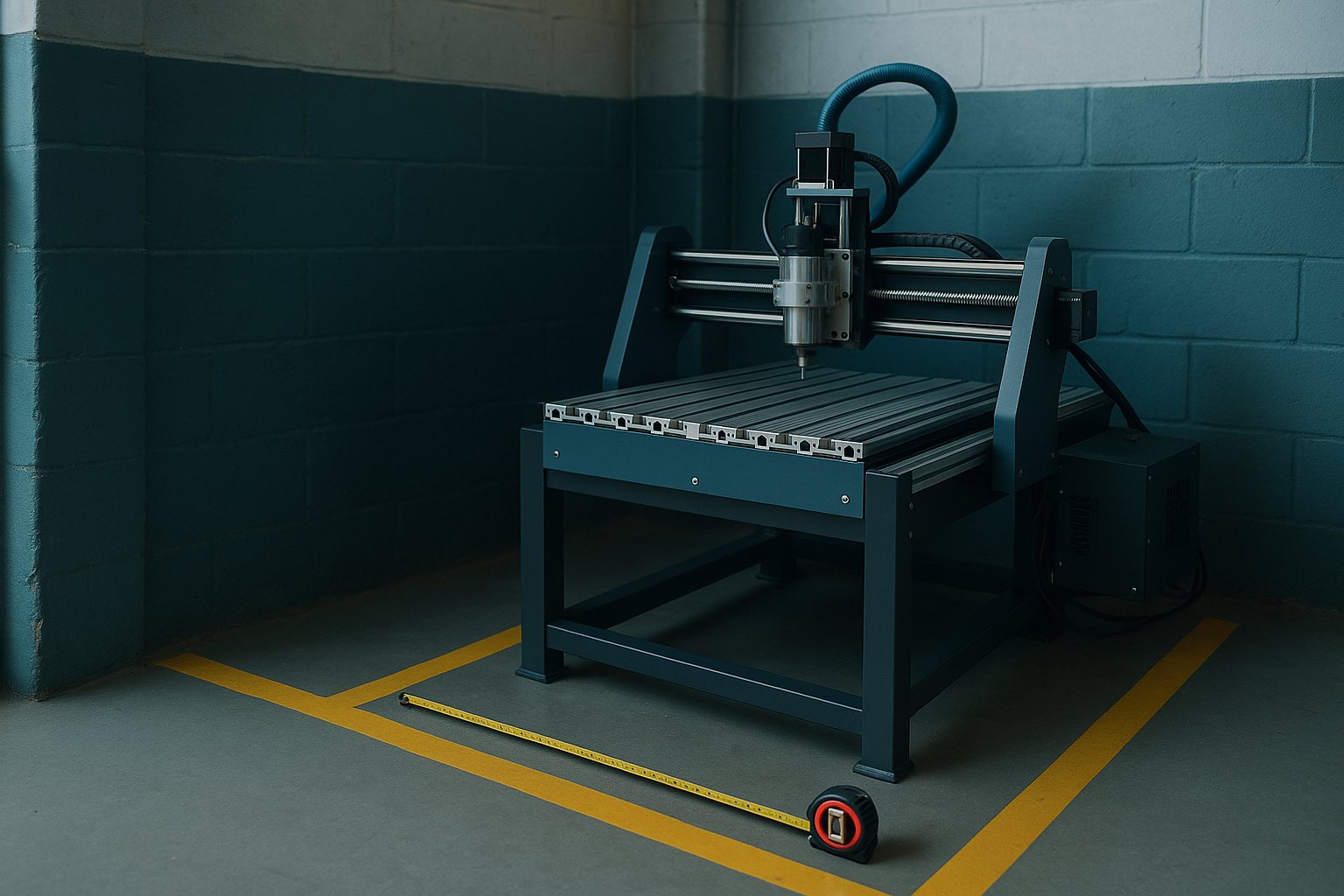
In practice, a compact bay means careful planning for every metre. A typical install might see a single CNC router set up along a factory wall with just enough clearance for loading 2440 x 1220 mm sheets. Material comes through one bay door, gets positioned with minimal turning space, and cut parts are offloaded onto a roller table or crate. Power is run from a nearby 230 V or three-phase point, sometimes through a breaker added by the maintenance team. Floor markings or painted lines indicate operator zones, and stock is often stacked vertically to save space.
Highveld dust or coastal humidity can affect machine longevity in small spaces. Teams in Durban or the Cape may add extra dehumidifiers or rust inhibitors, while those in Gauteng focus on regular cleaning to guard against fine powder build-up.
A Germiston fabricator wanted a profiling setup without losing a valuable metre to idle clearances. The operator allocated 4 x 3 metres at one end of the floor. After measuring, they found that material still cleared the entrance and the spindle moved freely inside the safe zone. With stock racked upright and a small trolley for offcuts, operator movement was never blocked, even when a courier came for collection. The machine was plugged into the shop’s three-phase supply, routed overhead to avoid tripping hazards. The team checked the setup each week against a nest checklist before the first cut ran.
Bringing clear floor measurements and details speeds up our advice on clearance and power needs. Snap photos and measure each wall and ceiling height if you can. List your main machine or planned purchase from our machines, and double-check your electrical supply, especially if you sometimes work during municipal outages or Eskom power dips. Consider how your stock gets delivered, where offcuts will go, and any workshop risks like wet patches or open doors. The team can also guide you if you want to combine your footprint plan with our DXF hygiene guide for easier file handover.
Include your location (city, suburb, or park) and expected sheet sizes so we can flag any regional considerations for transport, power, or humidity.
The most common issues are missed clearances for loading, crowding during busy periods, or running cable extensions across operator spaces. Small bays can also suffer from poor airflow, leading to overheating on big jobs. Skipping a weekly bay check after moves or new kit is installed can result in unsafe conditions or slowdowns. Coastal teams sometimes forget to plan for extra rust control, while Highveld sites may underestimate dust on bearings and rails.
Don’t hesitate to ask for advice, from layout tweaks to material coupon packs for machine calibration, we help you get the most out of your compact footprint. Send a message through our contact form for a tailored checklist.