Workshop Compact specifications, footprints, and honest limitations built for South African workshop conditions. We help you pick sensibly before spindle hours or courier charges rack up.
Before arranging delivery of a Workshop Compact, check your loading access and movement space from entry to bay. A common slip-up is underestimating the turning room needed for a 2.4 metre bed, especially if there are pillars, low doorways, or sharp corners near your entrance. If your floor is in a shared industrial block, make sure the delivery route is clear and free of parked bakkies or loose stock. On the Highveld, dry air keeps dust in suspension, so factor in an easy sweep path around the machine. In coastal areas, consider ventilation for acrylic and aluminium jobs, as humidity can affect chip extraction and cooling. Sorting these details before delivery saves time and prevents headaches once the machine arrives.
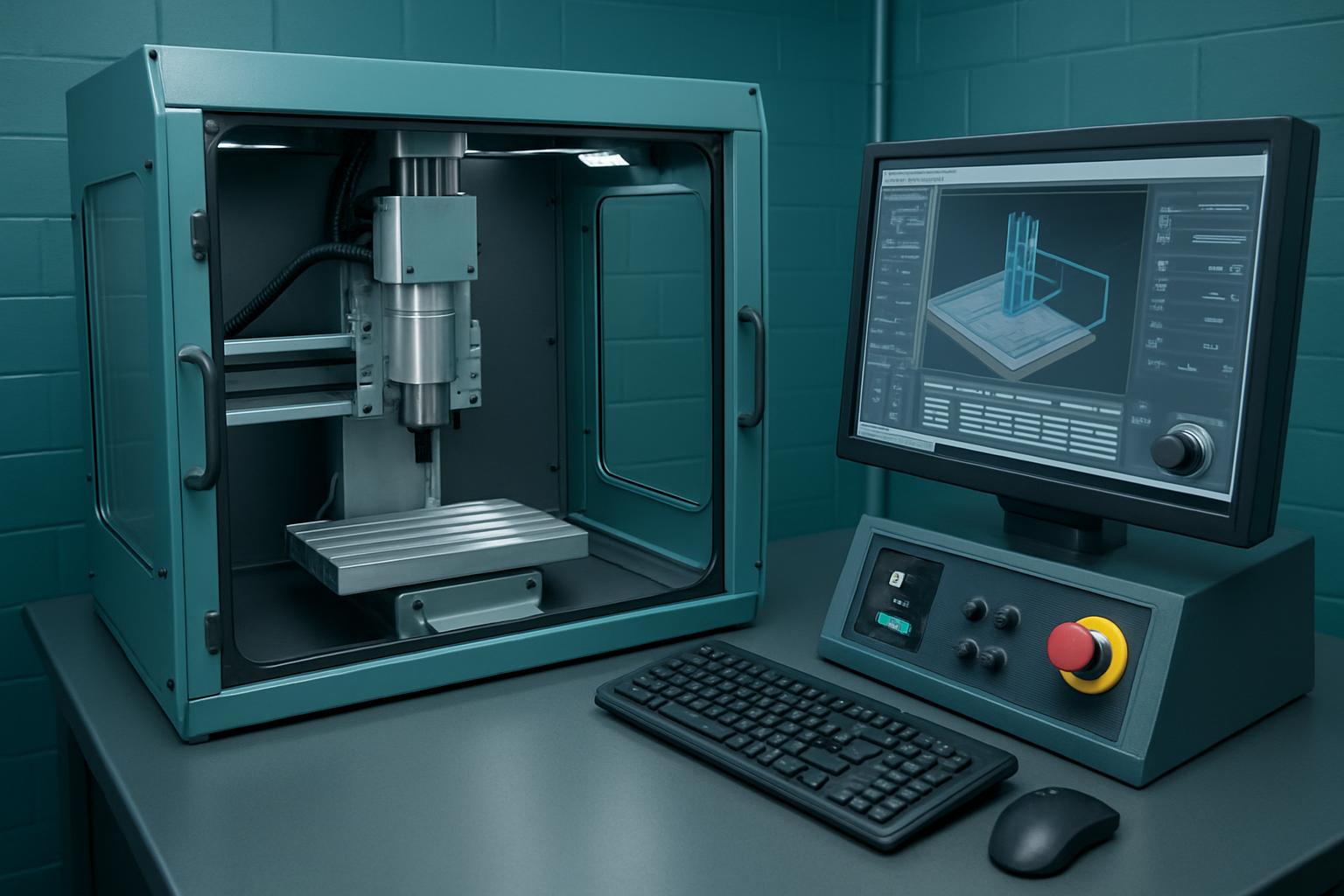
| Bed | 1.2 × 2.4 m |
|---|---|
| Footprint | Compact bay |
| UI | Teaching-ready |
| Tools | Shared library |
| Use | Education & SME |
Use our contact form for a tailored footprint.
Workshop Compact is a practical mid-size cutting and profiling machine built for South African workshops with tight floor space or jobs that change by the week. The footprint fits those smaller Gauteng and Cape bays, yet it takes on most sheets that local teams need to process. Quick sheet swaps and minimal edge cleanup mean your team spends more hours fabricating, not prepping. Operators appreciate the Compact when outages or municipal faults limit power and there is no time to wait for a big machine to warm up. Most teams turn to Workshop Compact when hand tools, routers, or basic saws fall short on repeat accuracy or leave untidy corners at production speed.
Workshop Compact suits shops, prototyping teams, and short-run suppliers processing up to 30 sheets per week but wanting flexibility to handle one-offs or urgent repairs. It works for joiners in Polokwane, signage teams in Durban, or metal shops near Bellville that need clean starts but do not run full factory shifts. However, if your job means constant 2-metre or thicker hardwood, or you run continuous three-phase motors in a 500 square metre factory, this is not the scale to target. You might outgrow Compact if you need 24/7 uptime, split shifts, or heavy automation between machines. Check your floor plan and loading access before settling, tight yards around Germiston or steep Cape Town driveways do matter.
A typical Gauteng team uses Workshop Compact for daily MDF, ply, acrylic, and aluminium sheet profiling, often feeding straight to assembly or finish. The 1500mm x 1200mm working area covers most standard sheets, and the footprint leaves enough space to move stock without pinching the aisle. Unpacking can be handled by a two-person crew with a trolley. The 230V supply means no three-phase drama for suburban or light industrial parks. Most weeks, a Cape Town signage shop sets up in the morning, runs nested parts by midday, and cleans down before the afternoon traffic. A cut job leaves less than a millimetre of burr on common grades, so teams skip sanding on the less visible edges.
A kitchen fitment crew near Kimberley needed 20 custom counter tops for a hotel. They sent rough dimensions and photos of tight corners to us. We nested the shapes for maximum yield and confirmed the sheet orientation. Their driver collected the cut panels a week later, sizes were true, so the onsite crew slotted everything with only a pilot drill, no trim work. On a rapid signage swap in Durban, the same machine profiled acrylic blanks late on a Friday. The client installed new branding before the weekend rush. Both teams avoided ‘just in case’ over-ordering and last-minute belt sanding.
Clear specs and fast answers start with plain info. We do not need gold-plated diagrams. These are the things we look for before quoting or cutting.
Most issues come from mismatched sheet sizes, unexpected power cuts, or picking the wrong edge finish. South African humidity and dust can throw off machine performance, particularly on the coast or up on the Highveld. We keep a running log of project hiccups, just noting dates and fixes, so we do not repeat slip-ups. If you are new to our process, two clear photos and a collection date help us get your job sorted without delays. For clear direction or to secure your slot, email us and we will follow up with practical questions, not empty promises. For more on spec support, see Machines or check Workshop Compact nesting & fixtures.
Verified Google reviews