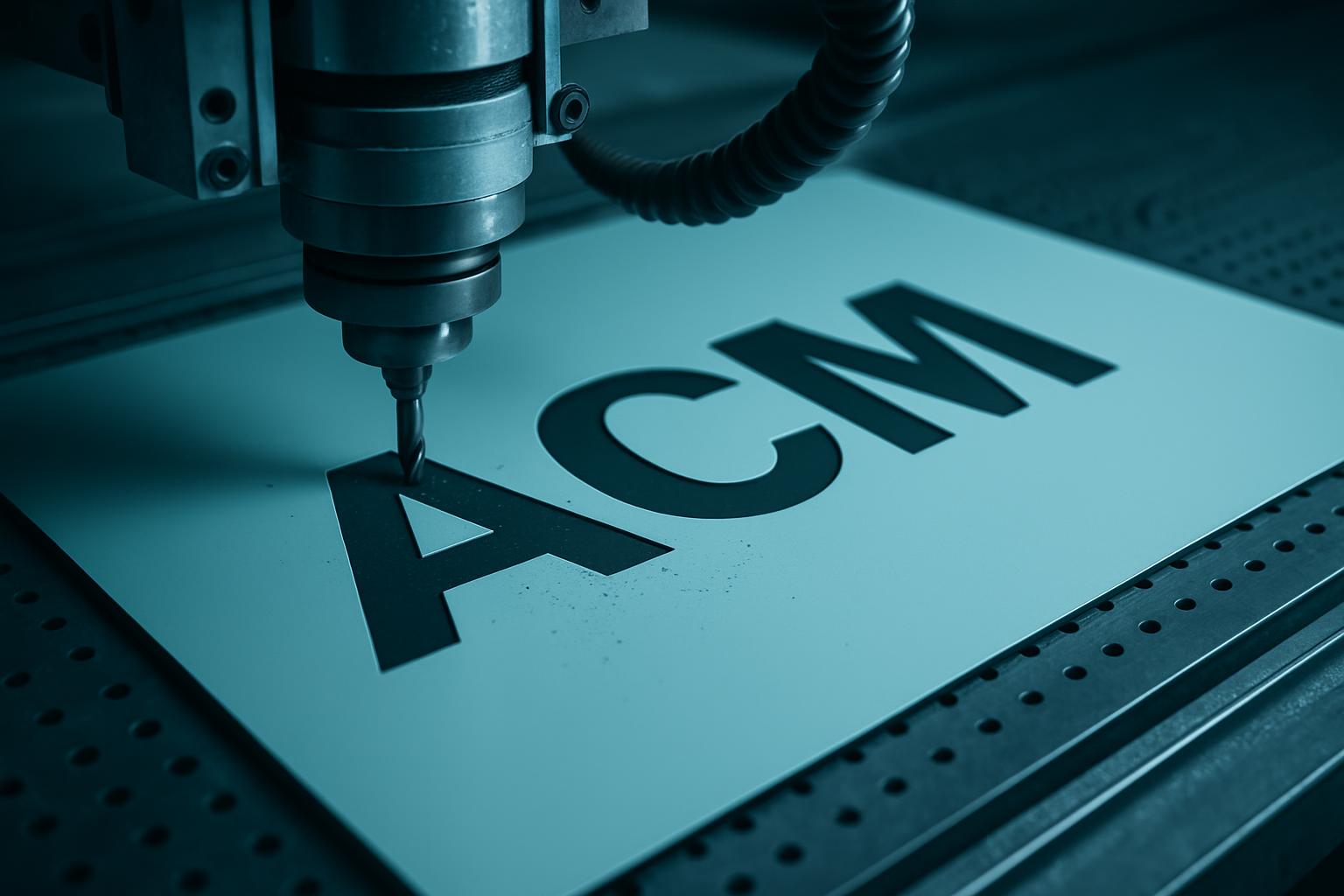
Get honest advice on nesting and fixture setups for SignBoard Profiler work in South Africa. Avoid wasted spindle hours and rework with choices that age well on local floors.
On the Highveld, winter air can dry out MDF and acrylic sheets, causing slight shrinkage after boards are cut and moved from a warmer cutting floor to a colder site. If you are running signboard batches for Joburg or Pretoria installations, it pays to check your nest layout for a small gap between parts. This lets each piece settle without pressing against its neighbour as the temperature shifts.
A common mistake is running parts edge-to-edge in the nest, which might look efficient on paper but can lead to tight fits or chipped corners once the panels are moved. Double-checking the material’s current moisture content and adding just a two-millimetre buffer can save time on site, especially when the boards are stored overnight before fitting.
Nesting refers to how we arrange your signboard or sheet parts to waste less material, cut clean profiles, and keep each part viable for the next operation. The right fixture holds those parts firmly, whether you are making a batch for a city tender or short runs for a fit-out in Cape Town or Gqeberha. We tune our nesting plans to South African site realities: full sheets sometimes arrive bowed from coastal humidity, odd sizes show up due to supplier substitutions, and transport between provinces can shuffle panel corners. Your fixture pick should hold, not just look neat in CAD.
We do not force you into a single method. Our approach pairs the SignBoard Profiler machine’s vacuum bed or mechanical clamping with nesting options that match your material, finish requirement and available handling on site. That means less time fussing over burrs or oval holes, and more time assembling or finishing on your own bench.
SignBoard Profiler nesting and fixture options fit best for teams doing medium runs, repeat signage shapes, or shopfitting panels where fit and assembly matter more than showing off a perfect outer trim. Municipal buyers needing clear part numbers, retail chains rolling out store updates, or fitters coordinating deliveries in Durban or Polokwane tend to get the most value.
If your job needs one-off heritage restoration, or every edge is visible on-site, you might need a different process. Sometimes, heavy contouring or extremely brittle finishes call for slower, more manual setups instead of fast nesting. It is best to check against your project constraints before moving ahead.
We start by mapping out your part sizes against available board stock, including typical local formats from Gauteng or Western Cape distributors. That way, a batch cut in Bloemfontein does not stall when a millimetre goes missing. Fixture options are selected on what your crew can handle with everyday tools, not just what looks smart on a spec sheet.
During setup, the SignBoard Profiler’s vacuum bed handles most signboard up to standard thickness. If you are working with textured or bowed boards, we usually suggest a mechanical clamp. This keeps your parts in position even if there are Eskom outages or when operators rotate on shift. We cut, label and nest so your kits arrive ready for fitment, saving you from spending another afternoon trimming or rerunning corners.
A Gauteng signage contractor needs 50 identical sign panels nested from 2.4 metre by 1.2 metre PVC boards. The brief notes slight warping from previous jobs due to supplier storage. We plan the nest to avoid known weak spots, add a simple side clamp for each panel, and keep reference holes visible for fast jig alignment on site. The panels run through the SignBoard Profiler on a Friday morning, trimmed and ready for the team’s weekend installation. Assembly goes ahead without extra handwork. Any leftover board is cut into blanks for a smaller job in Pretoria the following week.
In this case, the contractor saves on material and cuts down on time spent reworking or sanding edges. Fixture choice is based on what the team actually uses on their floor, not an imported spec. If you would like to see more examples with different setups, browse our Projects or check the Blog for feedback from other South African teams.
A clear brief helps us propose the right combination on the first reply, so your slot on the cutter is used for production, not back-and-forth. We recommend having numbers, material notes, and at least one photo ready. If you have it, a drawing or a hand-marked sketch goes a long way. Mention where the boards come from, your city, and any site issues like narrow access or storage limits. Timing is flexible most weeks, but let us know if there is a window that must be met for your operation.
Common pitfalls include missing local board tolerances, changing finish specs after nesting is done, or overlooking clamp options where surface flaws are likely. If your team feels unsure, ask for a simple breakdown rather than risk recutting. For advice tailored to your site and batch, send a message through our contact form and we will reply with a sequence that matches your operation, not just a copied process.
Verified Google reviews