Find the key specifications, constraints and practical options for the Prototype Cut Bay in one spot. Compare what fits your floor, brief or production window.
Before sending material to the Prototype Cut Bay, always check the sheet for warping or moisture content, especially if it has been stored in a coastal or high-humidity area. Even standard MDF and ply can shift slightly in storage, leading to uneven cuts or extra sanding if not caught early. Bringing in a flat, dry sheet saves both time and material, as the bay’s vacuum hold-down works best with consistent thickness and minimal bow.
A common pitfall is arriving with a sheet that is just over the 1220 mm width limit, hoping it can be trimmed on site. The bay is set up for efficient nesting, but oversized panels slow down setup and may require additional prep off the main floor. Double-check your sheet measurements and plan for a clean edge, especially if the next operation involves fitting into a display or enclosure. This small step helps avoid delays and keeps your prototype run on track.
Industries · Blog · Contact us.

| Window | Same-day typical |
|---|---|
| Tools | Production library |
| Proof | KerfCheck |
| Formats | DXF / STEP |
| Use | R&D & jigs |
Use our contact form for a tailored footprint.
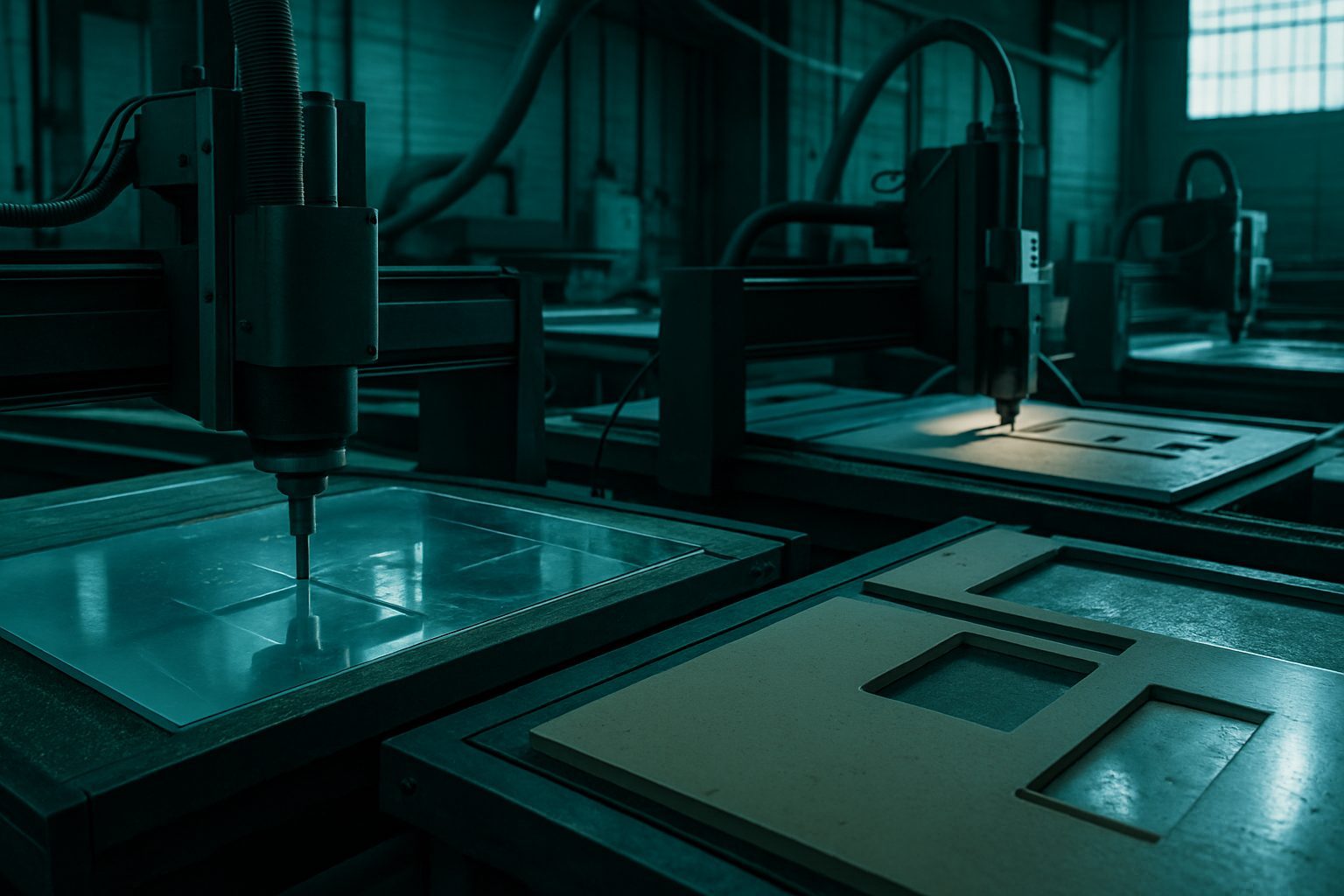
Prototype Cut Bay is the no-nonsense CNC bay for teams who need a controlled, traceable cut without a full production line. This is the space for one-offs, short runs, fixtures and test rigs, whether for engineering samples, design signoff, or urgent parts that cannot wait for a full shop cycle. The bay handles plywood, MDF, compact laminate, acrylic and softer metals up to the footprint and tool spec below. This bay does not suit large batch runs, oversize panels, or tough alloys, those need a production cell floor or heavier machine. If your job needs continuous three-phase support or export traceability, ask first.
What makes Prototype Cut Bay fit South African conditions: The setup has been dialled for the sort of constraints Gauteng and Western Cape shops deal with, like unstable power, high dust, and transport from Gqeberha to Polokwane. Spec sheets do not hide machine quirks that matter for local assembly, rework, or on-site fit. If you are used to waiting on spares or having to jury rig a mains feed, this bay meets you where you are.
Prototype Cut Bay works best for designers, makers, workshop owners and engineering teams who need parts that are accurate enough for assembly, but do not require full production polish. Architectural modelmakers, signage builders, and industrial designers are frequent users. If you are building a master pattern, an electronics enclosure, or a jig for short-term use, the bay’s spindle, bed and extraction will cover your brief. DIY users can be accommodated, but an accurate drawing is a must.
This is not the right bay if you need production-level throughput, tight aerospace tolerances, or complex multi-material jobs. Heavy aluminium, exotic alloys and sheet over 1.5 metres wide are out of scope. For those, see the full machine list or contact us for direction.
Below are the main dimensions and limitations as set up for South African floors. If your job comes in at a tight number, check with us before finalising your brief. All options have been tested on actual parts bound for local workshops, not just in a spec lab.
• Bed size: 1220 mm x 2440 mm (standard sheet, up to 25 mm thick). • Z travel: 120 mm max (actual safe cut depth closer to 90 mm for most jobs). • Spindle: 5.5 kW air-cooled, 230 V, single phase, compatible with most light industrial supplies. • Extraction: Two-stage dust for MDF, ply and plastics, no HEPA, not suitable for toxic composites. • Material handling: Manual feed, two-operator lift recommended over 30 kg. • CAD/CAM input: Accepts DXF, DWG or PDF. Hand sketches need digitising before cut. • Tolerances: Within 0,3 mm for most bed positions under normal conditions.
A Cape Town lighting designer needed custom router-cut acrylic faceplates and a birch ply backer for a trade show unit. She sent test DXF files and a photo of her mockup. The bay team checked fit to the 1220 mm x 2440 mm bed, confirmed the acrylic thickness was well within Z travel, and noted potential chipping around etched letters. They briefed her on aligning the part to the bed clamps and prompted for a second photo after fitting the first batch. Because she had set her constraint (must fit into a sedan boot, max 1.2 m), the team could nest efficiently and keep cut edges clean, even with coastal humidity. The job moved from photo and file to ready-for-assembly in under a week, no rework, no benchside drama.
Before you send a message through our contact form, gather: a basic drawing (DXF or PDF is fine), a photo of the intended use or fitment, and your hard constraints (like maximum sheet size or cut depth). If the item needs to travel, specify the next stop (your workshop, a job site, or your client’s). Any municipal or customs paperwork should be mentioned early, our team can advise if a different bay or finish suits. The clearer your input, the quicker your parts move from prototype to the next stage.
Frequent missteps on prototype jobs include assuming a machine can cut thicker or denser material than its safe spec, misjudging what will fit through an industrial park doorway, or skipping the power check when running on single phase. Teams also trip up sending hand sketches with no measurements or omitting the final use case. We keep a short record of what went wrong with similar jobs and ask for specifics before spindle hours start. If your last project hit a snag, tell us what happened, the fastest fix is an honest constraint.
For more on what our machines are set up to do, see the full machines overview. For examples across different industries, you can also browse the industries page.
Verified Google reviews