Here are the essential specifications and practical limits for the ProfileEdge Router in South African workshops. Use this to match its strengths to your own production needs.
When switching from standard MDF to a denser board or a laminate with a tough core, always check your tool sharpness and feed rate before starting a full run. In South Africa, we often see jobs where a customer moves from a softer board to a resin-filled panel without flagging the change, which can cause burnt edges or sudden bit wear. Run a short test cut on the new material first, and listen for any change in spindle sound. If you notice heavy swarf or a rougher edge, slow down the pass and consider a downcut bit for a cleaner finish.
One common pitfall is using the same vacuum pattern for all materials. Thicker or slicker sheets may not hold as well, especially in a humid coastal shop. Mark out your hold points and check suction before running the stack, so you avoid sheets shifting mid-cut. A few minutes spent on these checks saves you wasted material and keeps the job on schedule.
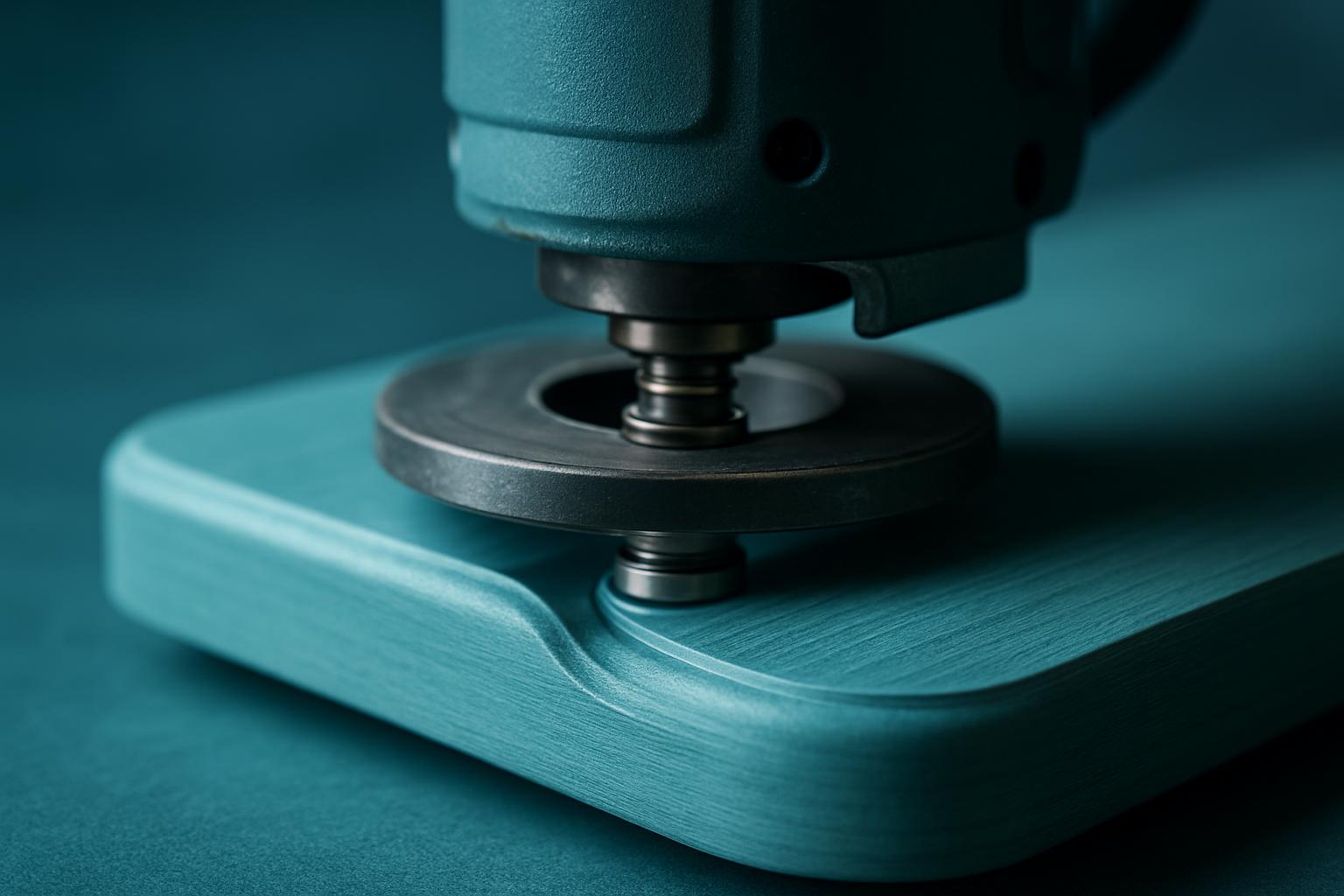
| Profiles | Radius / chamfer / ogee |
|---|---|
| Probe | Edge follow |
| Spindle | ATC |
| Feed | Material-aware |
| Use | Furniture & shopfit |
Use our contact form for a tailored footprint.
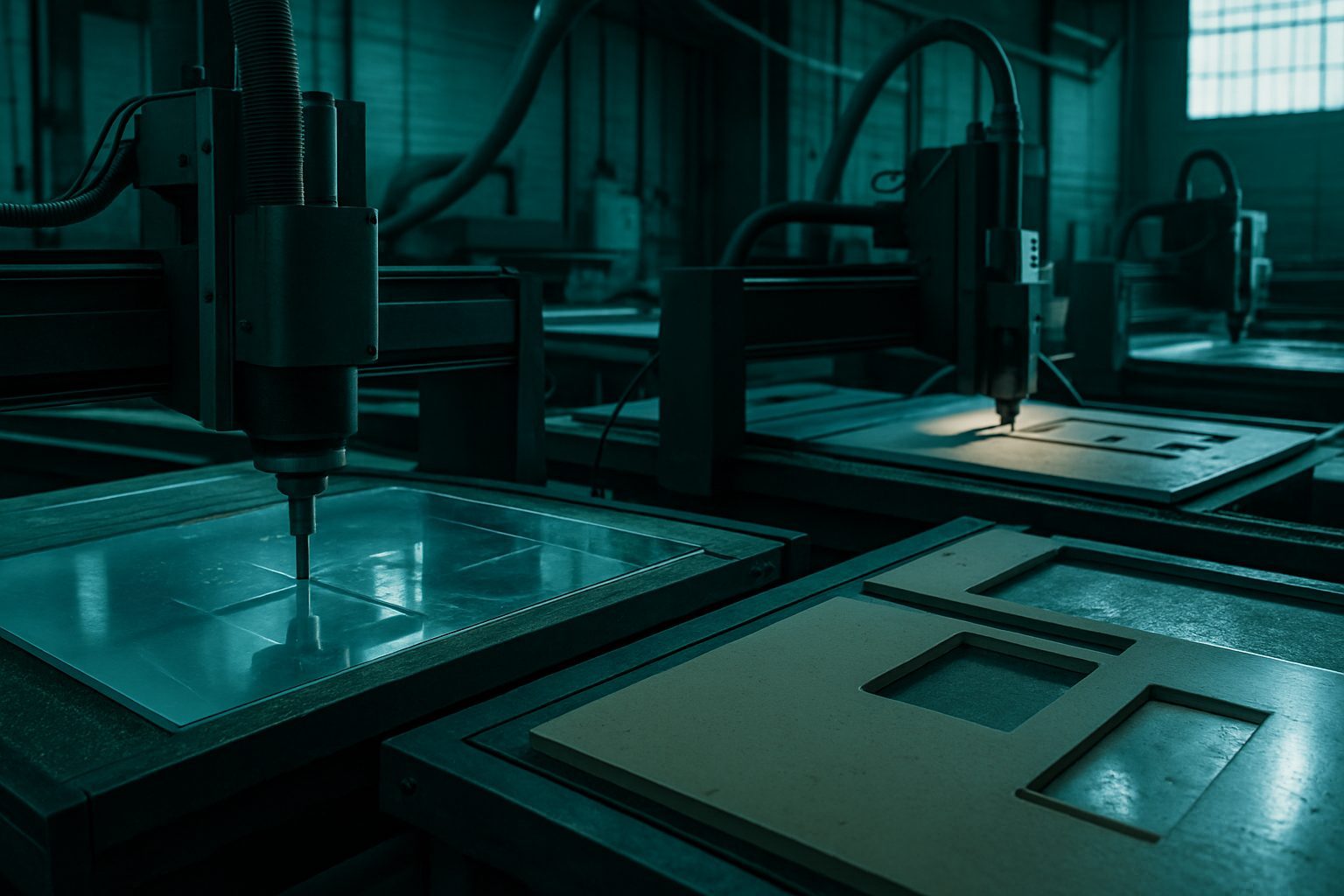
The ProfileEdge Router is our main flatbed CNC router built for reliable profiling, routing and light pocketing of sheet materials up to 2440 mm by 1220 mm. This machine sees daily use cutting plywood, MDF, compact laminate, and plastics for furniture makers, shopfitters, packaging teams, and signage, especially when a square edge or slot is as important as a clean face. It suits crews that already handle sheet handling by hand or small trolley. The operator needs basic CNC familiarity but not a dedicated programmer. If your business needs tight-tolerance curved profiles or batch runs above 50 sheets per week, this router covers the need without demanding a laser or waterjet budget.
It does not suit those looking to run heavy structural aluminium or marine-grade stainless, or any site where dust control is not tolerated. It also is not the best fit for deep 3D carving or production of tiny parts under 40 mm squared, as the vacuum hold loses effect. For that, consider other machines in our full machine catalogue.
The ProfileEdge Router runs on a 230 V three-phase line. To keep your cut quality and avoid downtime, the supply must be steady, as power surges or deep outages will trip the machine’s protection circuit. You get reliable tolerance and repeatability at ±0.2 mm across the full bed. The gantry clearance is 120 mm, so any sheet stack or vacuum hold-down should stay under 105 mm to pass safely. While the table itself is 2500 mm by 1300 mm, the usable sheet size for actual routing is 2440 mm by 1220 mm, which gives enough room for clamps and safe vacuum hold.
Typical jobs pass from nesting and fixture setup directly to the router bay, so you get your cut kit ready for assembly or post-process paint. Maximum tool diameter is 12 mm; most pass depth is 18 mm per cycle in medium-density board. Swarf handling is local extraction only, no full ducted system, so if your job runs fine Highveld dust or needs coastal humidity management, flag that early.
For a run in Gauteng, a shopfitter sends us DXF files for 30 plywood carcass panels, each 18 mm thick. We check for oversized tabs or fiddly inner corners, flag one missing datum, and confirm the vacuum pattern will work. After a round of nesting to fit three panels per sheet, we run a small test cut to prove the fit and adjust for a slight taper from a worn bit. The finished batch comes off labelled and face up, ready for edge-banding. The owner collects in one trip and bolts the panels together on site with a cordless drill.
If that job had called for denser or resin-filled board, we would have slowed the pass and changed to a downcut bit, but the sequence stays much the same.
Before you contact us, jot down your actual sheet size, the thickest and hardest material in the run, and any finish or drill patterns needed post-cut. Digital files help, but if your generator’s out or you only have phone photos, those will do for the opening round. The more real constraints you list, like a bakkie load height, off-site assembly, or tight workshop corners, the faster we can check fit on our side.
For most jobs, we work off two or three core constraints. If you need tooling or finish details, mention them up front. Email all queries through our contact form and include your city and preferred timing (weekdays only).
Most wasted runs happen when the real constraint gets missed, especially odd-sized sheets, hidden metal inserts, or the wrong edge finish. Trying to cut too deeply or fast through hardboard risks melting or poor edge quality. Power cuts can interrupt a CNC cycle, so plan for timing slack. Rushing layout to ‘fit everything on one sheet’ can lead to tabs too thin to survive hand unloading.
If you’re not sure of a constraint or have never worked with nested sheets, ask first. We keep a running note of what failed last time on similar briefs to avoid repeat mistakes. A clear list up front saves you a re-run fee or wasted bench time. See how we handle batch work and tricky profiles on our projects page.
Verified Google reviews