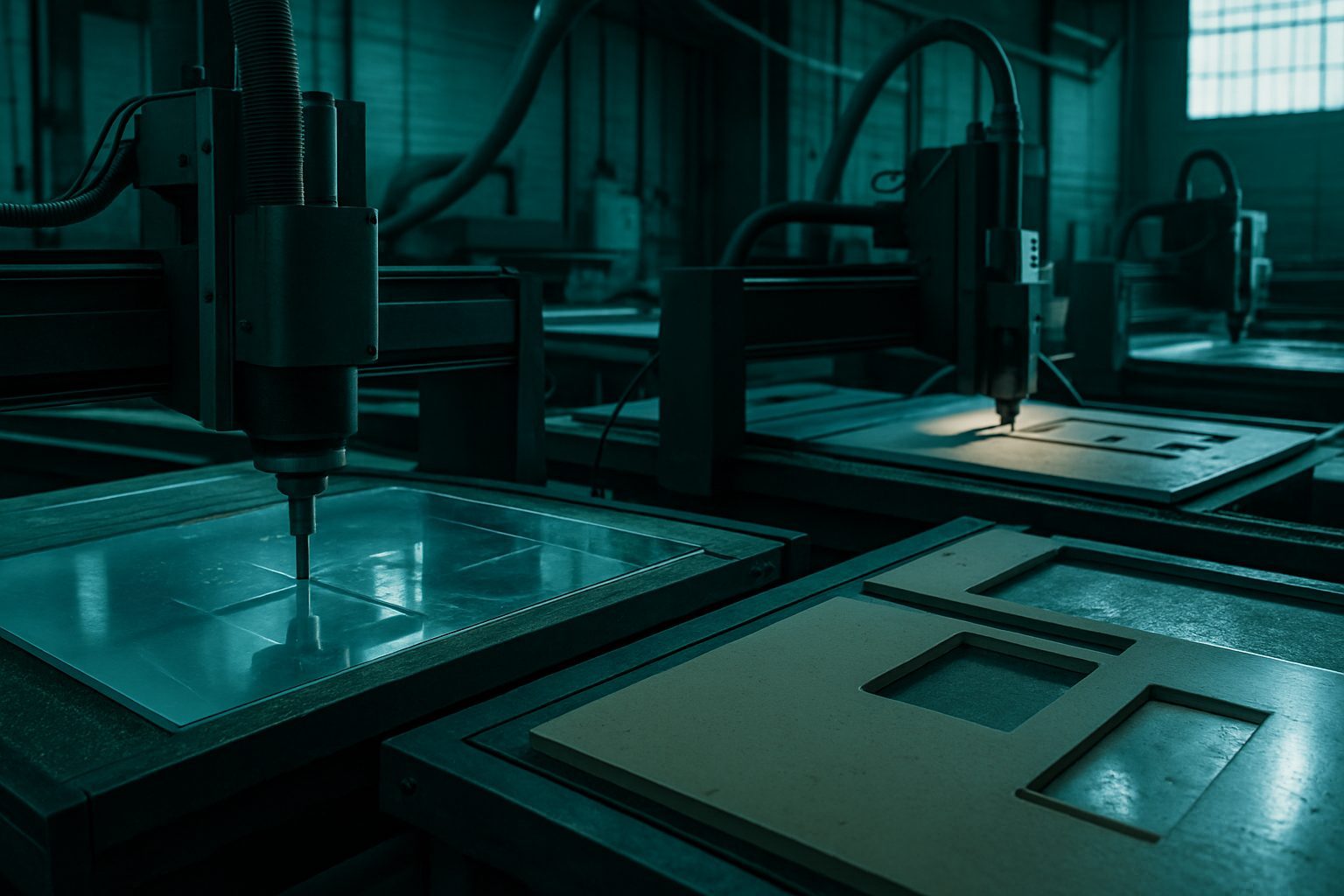
Published dimensions and options for the NestCut CNC Panel as used on South African floors. Honest numbers for planning your nesting, profiling, or prototyping run.
Before starting your first production run, double-check that your sheet storage is close to the machine’s load zone. Teams who set up their racking within two metres of the bed find less downtime and avoid scuffing material during moves. In one Johannesburg joinery, a misplaced stack forced operators to cross a busy aisle with each sheet, slowing the job and risking damage. Keeping loading paths clear and prepping enough trolleys can save hours across a full batch.
Another point to watch is your air extraction. If you run a lot of MDF or chipboard, dust can build up quickly in humid coastal shops or during dry Highveld spells. Plan for regular filter checks and keep spares on hand. Sticking to a weekly clean-out keeps the vacuum bed pulling evenly and prevents missed cuts or lost hold-down, especially during longer jobs.
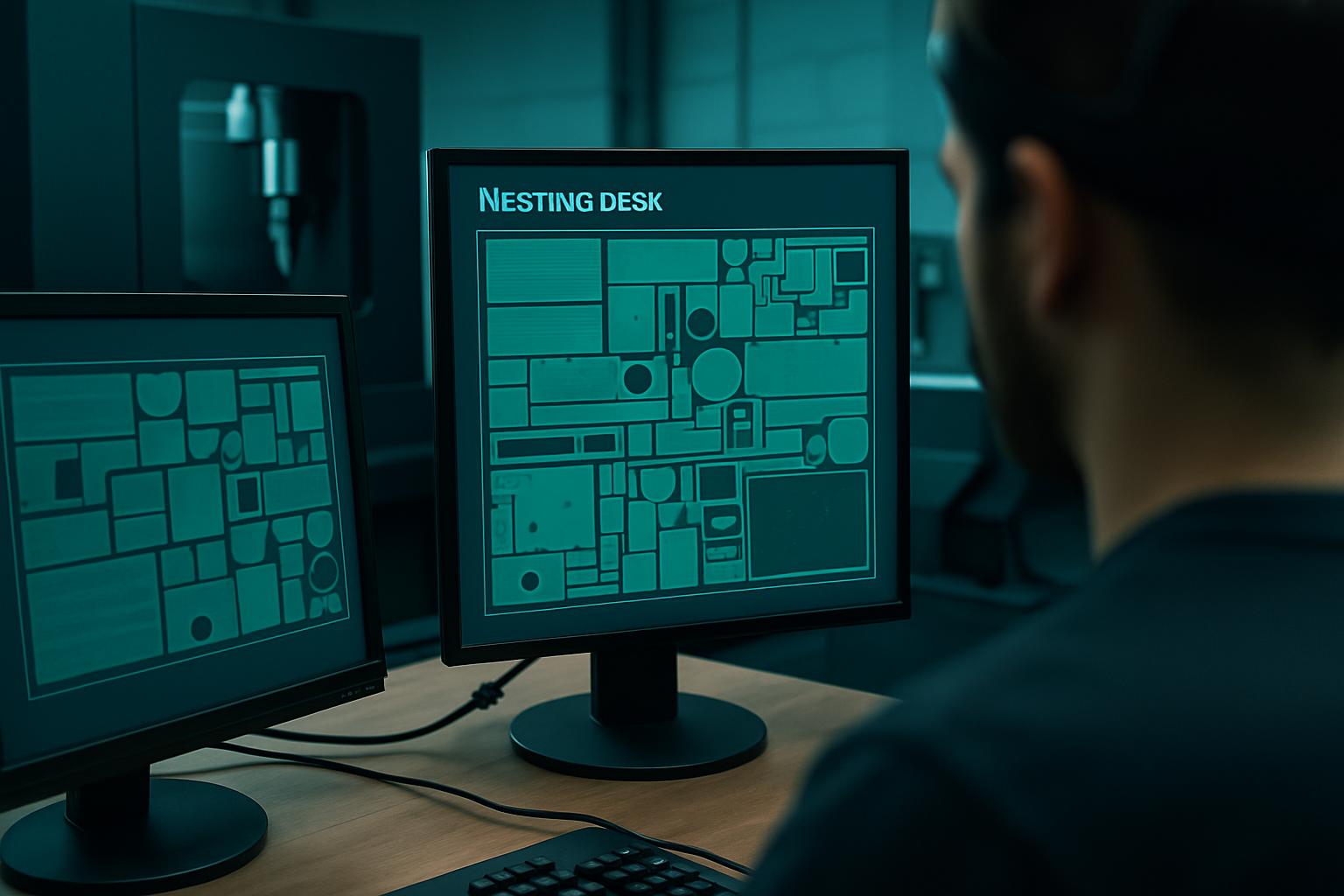
| Engine | True-shape nest |
|---|---|
| Labels | Remnant maps |
| Input | DXF batch |
| Out | G-code + PDF |
| Compat | Precision Sheet Router |
Use our contact form for a tailored footprint.
The NestCut CNC Panel is our go-to machine for sheet cutting, nesting, and profiling where clean handoff matters. Built for South African conditions, it eats up plywood, MDF, laminate, aluminium composite and similar materials in full sheets up to 3050 x 2050 mm. The 9kW spindle and vacuum bed handle steady hours even in a Highveld winter or a Durban summer. This panel works well in Gauteng factories, Cape Town joinery outfits, or any operation that needs repeatable, fuss-free flat part production. It saves you a messy post-cut cleanup, and teams report time back on the bench rather than fixing ragged corners by hand.
This machine suits joiners, shopfitters, signage houses, furniture makers and sheet metal fabricators who send us full sheets and want each part ready for edge work or finishing. If your programme runs in the dozens to hundreds per pattern, and you want a clear spec nailed before spindle hours start, you are in the right place. It is not a fit for micro batches, ultra-fine engraving, or field repairs. If you plan to cut steel thicker than a typical door panel, or need deep 3D carving, there are better platforms for your job. For cut lists that will live on municipal paperwork or need clean serialisation, this platform is built for it.
Prepare a floor area of 4600 mm by 3200 mm for the NestCut CNC Panel, which covers walkways and loading access around the machine. The unit itself fits onto a 4000 x 2350 mm footprint. Make sure there is enough headroom for turning full sheets and space for extraction ducting, especially if you regularly cut MDF or want to keep dust down during power cuts or outages. The vacuum pump works on a 230 V three-phase supply at 32 amps, and fitting a surge protector is wise during Highveld thunderstorms. Machines are often relocated between Gauteng and Gqeberha, so if you require delivery and on-site placement, let us know early to plan for truck access and rigging. We also offer machine try-ons at our Germiston floor when space allows.
A Durban shopfitter needed 20 identical melamine counter units, each in 18 mm board. Their draughtsperson sent a DXF and constraint notes: no part longer than 2200 mm, edge finish left raw for post-processing, and a tight turnaround to fit an upcoming store refit. We loaded their cutting pattern for nesting, with each sheet yielding side panels, tops, and shelving. All parts left our Germiston bay labelled and stacked by sequence, ready for the shopfitter’s local painter. The fit was checked against the supplied drawing before packing, saving the client from a second trip or last-minute bench trimming.
You will save a cheque run and a fair bit of back-and-forth by having these pieces ready before you send a message through our contact form for a spec check or quote. Two photos and a drawing are often enough if you are just starting. Add a sketch of your floor area if you want try-ons. Give us your city, timing, and any detail on site access or power. The more honest your constraint list, the better we can keep time and cost in line.
Ambiguity on your constraints is the usual trap. Mistakes come from picking a machine or finish before the brief is written down. We see missed fastener holes or wrong sheet orientation slow down Gauteng jobs each winter. To avoid this, we keep a record of what tripped up a similar job last time, and raise the question if your floor or timing may clash with panel moves. If you are unsure on an option, ask. Our team will match your spec to the right process or guide you to a related finish if the fit is not clear. It is much easier to debate a drawing today than fix a benchful of rejects tomorrow.
Verified Google reviews