
Blog

Tool life in coastal humidity

Coastal humidity, especially around Durban, chews through tool coatings and shortens tool life fast. Here’s how our team keeps bits sharp, jobs on spec, and rework down when the air won’t cooperate.

Routine checks for Monday morning shifts

One practical step that helps coastal teams is running a brief tool inspection every Monday before the first job. Even if tools were stored sealed, the combination of weekend humidity and salt can start corrosion in places you might not spot at a glance. Operators line up all cutting bits due for use, check for pitting or early dulling, and log what passes or needs swapping. This routine takes ten minutes but can prevent a week’s worth of profile issues or emergency re-orders.

A common mistake is assuming a tool that cut fine last Friday will still perform after a damp weekend, especially in places like Durban or Gqeberha where the air rarely dries out. By making the Monday check a habit, teams reduce scrap and keep work on spec, even when weather is unpredictable.

Keep exploring

Industries · Machines · Contact us.
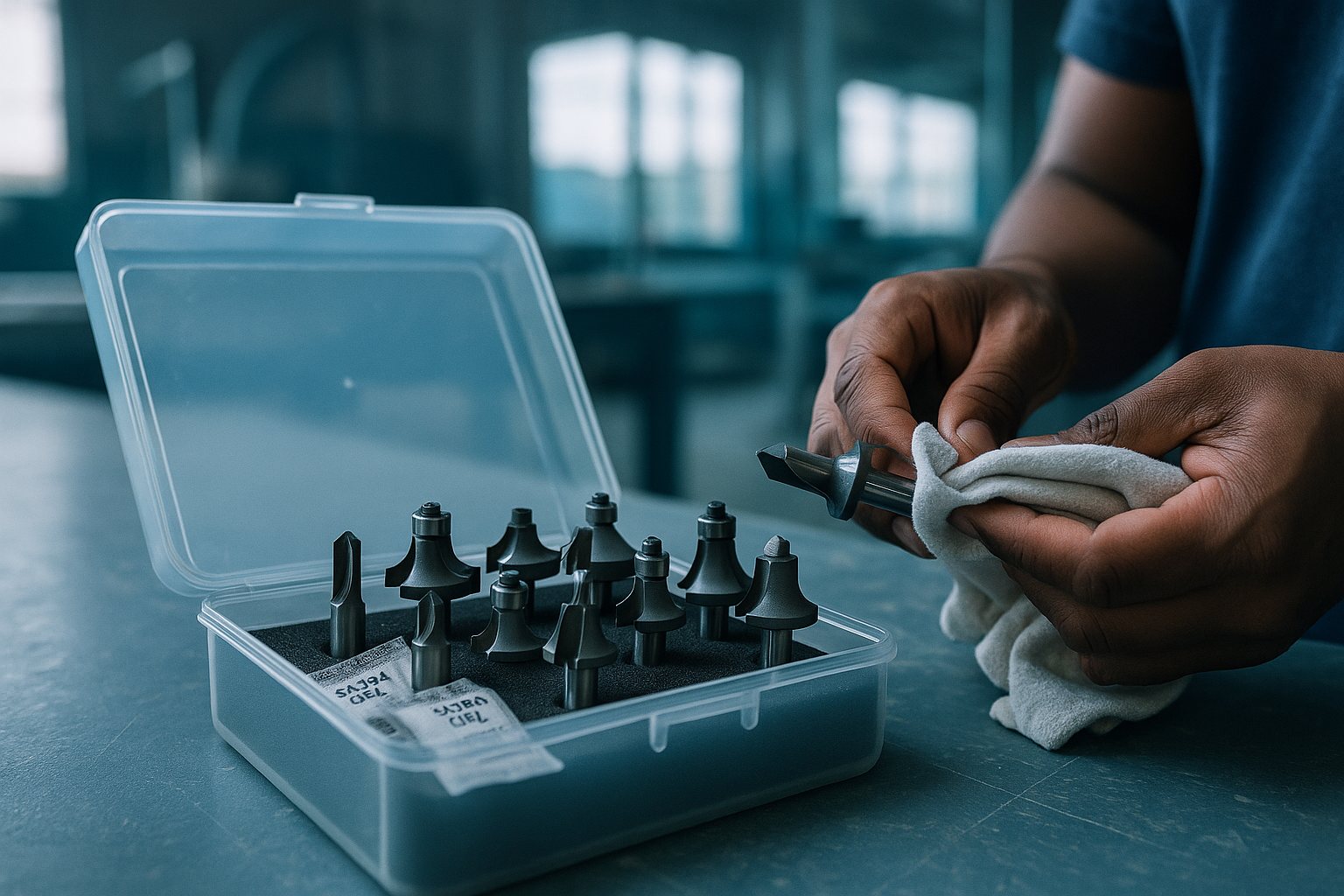
Workshop context

Bit care when Durban air eats coatings.

What we recommend

Keep this habit alongside regular checks with SignBoard Profiler and ask for a live demo at Sunnyrock or your nearest showroom when you want to see results on your own material.

What coastal humidity does to cutting tools

Even a seasoned floor in Durban or Gqeberha knows when the sea breeze starts biting, tool life is never quite what the label claims. Salt and constant moisture work their way through bit coatings, meaning even coated carbide ends up pitting sooner. The effect sets in faster on quiet weekends or when packs get left open. Unless handled with intent, you end up with edge chatter, poor profiles, and a run of scrap that would not have happened on a dry Highveld morning.

Workshops closer to the sea, or even those just fighting everyday coastal damp, face tool turnover that inland shops rarely see. It becomes more than just buying pricier bits: it is about adapting routines to get more value from each spindle hour and less downtime from sudden tool failure.

Who needs to care and who does not

If your workshop lives in Durban North, Amanzimtoti, or anywhere your wire rack picks up surface rust by Thursday, this applies to you. Shop teams working in high-rise developments along the Cape Sea Point or regular contract crews in Ballito see the impact most.

This is less of an issue for sites in Bloemfontein or Polokwane where air is reliably dry. If your jobs only run seasonally on the coast or your tooling is single-use, you can usually get away with standard routines and still hit spec. Weekly tool care matters most for regular cutting, not one-off installs.

How the Cut2Shape crew handles it in practice

We keep it simple: we write the constraint down before picking tools, machines, or even specifying a finish. Every run starts with a one-page brief, covering power, access, timing, and who signs off. If a job lands in coastal Gauteng humidity after a rain spell, we take the same steps. Our operators store bits sealed until the moment they load the spindle. We break batch sizes for anything sitting over a weekend, check for surface corrosion each Monday, and avoid over-relying on high-end coatings unless the maths works out.

On live jobs, it is better to ask a clear question before the order than to end up with a failed profile or an urgent reman. Experience shows that skipping constraint discovery, like missing a humidity check, means someone pays for a rush fee or an awkward second visit. Our Machines page covers the CNC types we prep for coastal air, and Finishes details which surface treatments last.

Durban job example: coated bits on ACM panels

Last quarter, a Durban team needed 70 ACM panels profiled with tight spec on edge finish. The brief landed over email: work was to begin early Monday, with forecast rain and 85 percent humidity. We loaded new coated carbide bits, stored in sealed containers until fitment.

Before starting, the operator checked every tool for micro-pitting, flagged two that had started to dull, and swapped them out. The panels came off the bench within tolerance and with no extra pass, saving spindle time. We left a close-out note so the next shift knew which bits could still run if another batch came in during the same weather. Just basic routine, no drama.

Checklist: Before you email about tool life or coastal wear

To get a useful answer, help us understand your floor and your constraints the first time. A tight brief means less back-and-forth, no guesswork, and a smoother handoff to your contractor or internal team. You do not need polished spec sheets, but be ready to answer these.

Common pitfalls and avoidable mistakes

Skipping site constraints often costs time and money, especially on the coast. We have seen teams rush to match a mainland process without checking tool storage or handling, only to bin half a batch because of premature dulling. Another miss is assuming a high-end coating always fixes coastal air, it rarely does for long.

Not writing down who signs off or how tools are stored leads to confusion, extra clean-up, or unnecessary rework. If you need a walkthrough on tool life or want to talk through constraints with someone who has faced Highveld dust and Durban humidity, send an email through our contact form mentioning 'Tool life in coastal humidity'. If you want more background, see our Blog for related shop-floor articles like Remnant racks that stay tidy or Core-safe bits for honeycomb.

Talk to Cut2Shape

Our contact form · Sunnyrock nest floor