Press
Kerf honesty underpins our cutting process, shaping every client order we deliver. Here you’ll find why we confront kerf head-on instead of hiding it away.
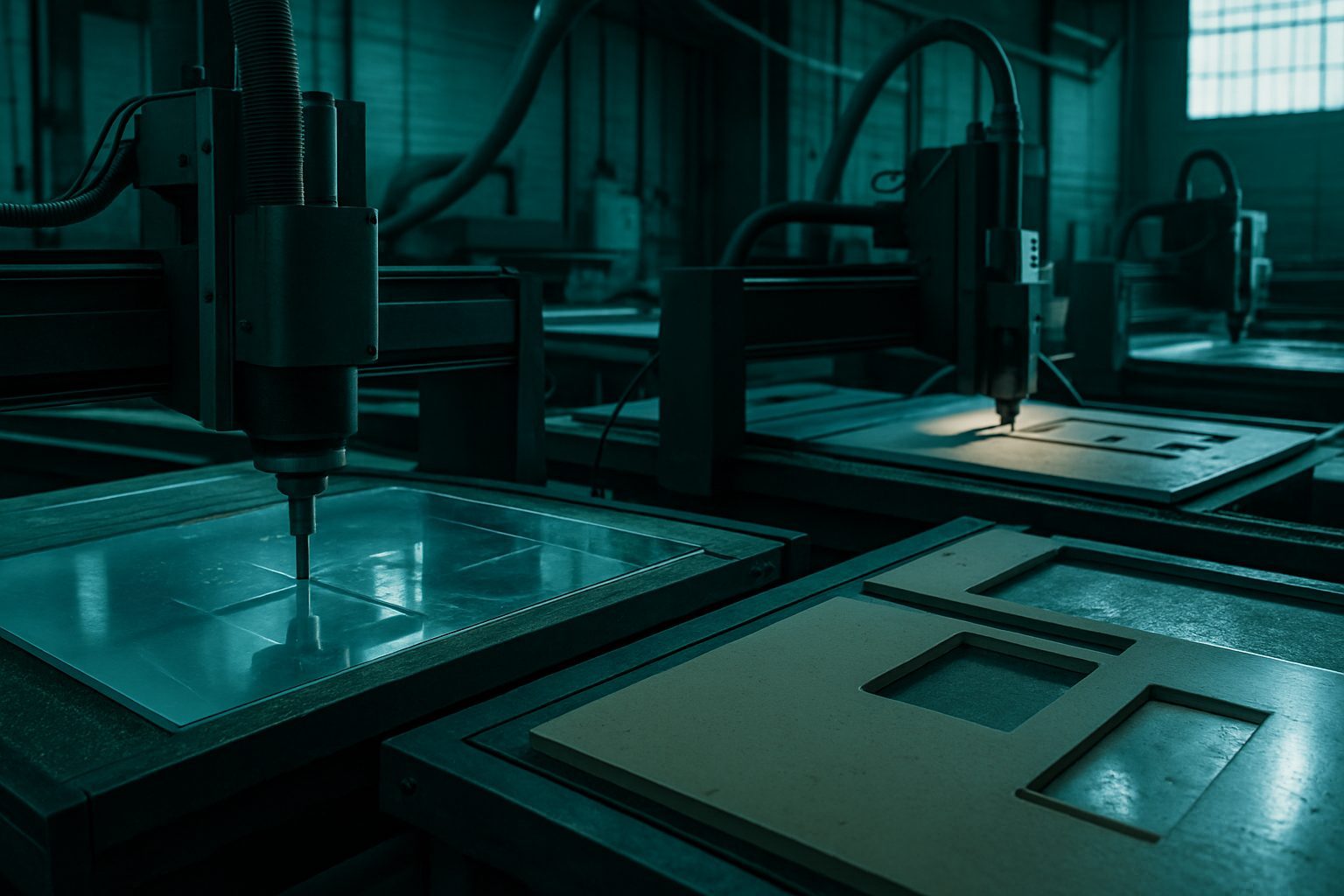
Send pressIn most workshops, a job arrives neatly drawn and specified, but once the first cut is made the real material story starts. Kerf, the width of material removed by the cutting tool, shapes the final part in ways you only notice on the bench: a fit too loose for a bolt, a slot that’s a millimetre out, or an offcut stack that’s suddenly a cost problem. At Cut2Shape, we talk about kerf upfront because it’s not a side detail for South African production. It’s the main variable separating a batch that slots together first try from one that drifts out of spec when the afternoon humidity or a worn blade shifts the numbers.
Kerf honesty means every quote, drawing and nest we supply tells you exactly how much material will be cut out, at what width, on which machine. We document kerf figures for each common process: CNC router, fibre laser, plasma and waterjet. Whether you’re ordering aluminium sheet in Joburg or birch ply for a Cape Town studio, you get kerf data that matches real-world tools and speeds, not a software default. This lets you plan joints, spacings and yields knowing what will truly land on your floor, not what’s stuck in the CAD. Machines and finishes both play their part.
Kerf always affects the fit and count of finished pieces, but its impact spreads further the larger the order or the tighter the tolerance. Owners in Germiston who are building custom steel enclosures count on us to supply profiles that can be welded straight after arrival, without a the extra rack of rework. Eastern Cape furniture shops use our MDF parts where a hidden 0.2 mm makes or breaks a mortise and tenon. Consistency from batch to batch comes from treating kerf as a system variable, not a rounding error. Every industry from signage to agricultural gear gets the benefit.
With kerf honesty, every part spec and production conversation gets clearer. Instead of guessing at what the saw or torch will remove, you know early if you need to adjust slot widths, tab counts or charge for extra sheets. You can put your energy into the actual assembly or welding, not decoding a mysterious cut list. We encourage anyone planning a run to ask for a sample, or walkthrough of the nest plan, before committing a large order. Most weeks, we help sort out issues that would have knocked a job out of square at delivery.
We keep a growing library of kerf reference sheets, by machine and material, available to customers and media on request. If you need the kerf width for 6 mm mild steel on our Gauteng plasma cutter, or want router figures for birch in coastal humidity, just send a message through our contact form. For broader workshop process topics, our resources and blog cover CNC habits and case studies from Durban, Gqeberha and further afield. For press, there’s a full press kit and media contact ready.